

MEDITATION / A GENTLE PRACTICE YOU CAN RETURN TO
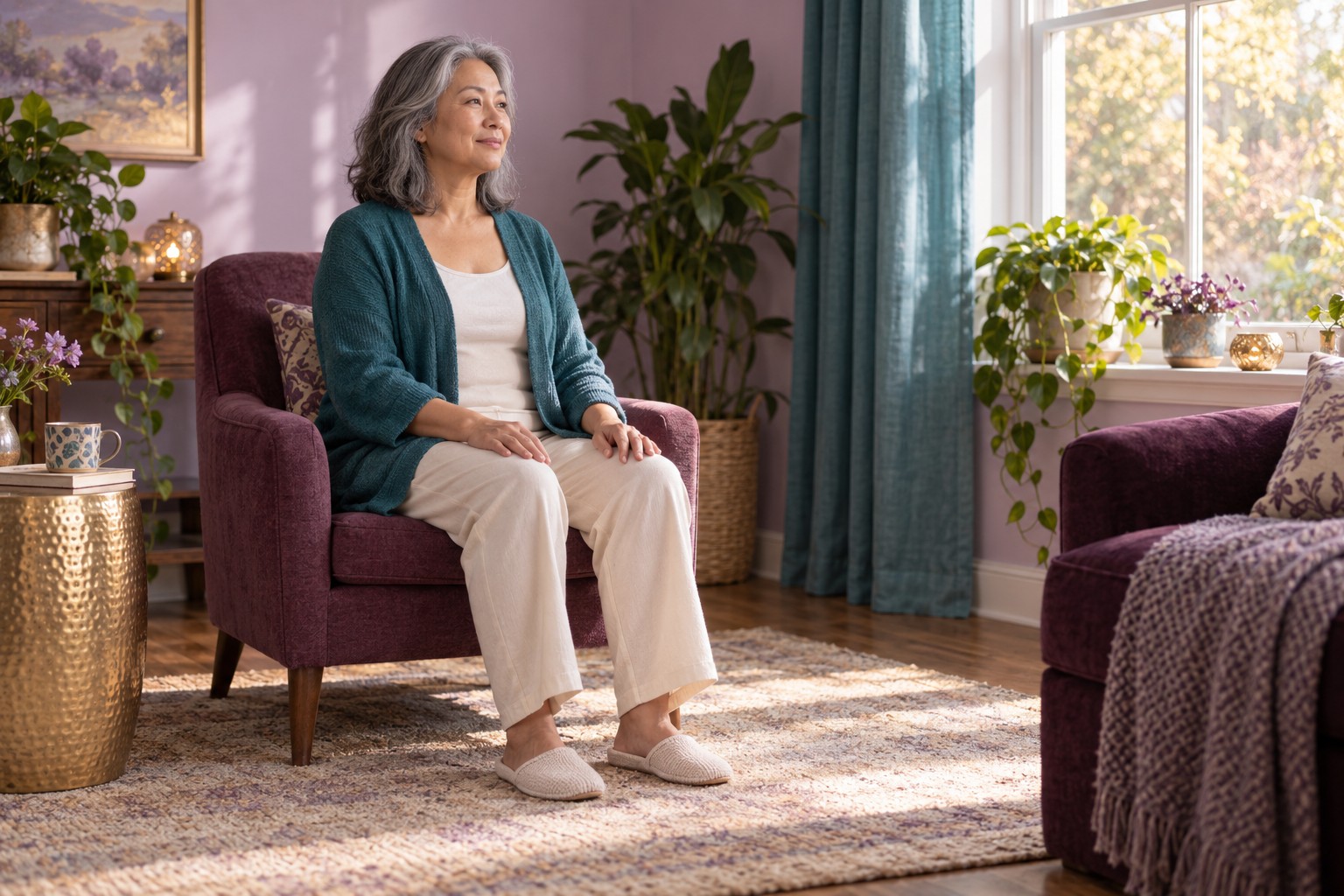
Making time for meditation can feel like an invitation to listen more closely—to your thoughts, your surroundings and, if it is part of your beliefs, your spiritual life. You do not need to become a different person or achieve perfect stillness before you begin. A comfortable chair and a few unhurried minutes can be enough for a first practice.
Committing to meditation means finding a way to return that fits your life. It does not mean promising never to miss a day, increasing your session length indefinitely or expecting meditation to solve every health concern. The plan below helps you start small, notice your response and adjust with kindness.
Meditation, mindfulness and spiritual meaning
Meditation includes different approaches: attention to a sound, a phrase, an image or a sensation. Mindfulness is a way of noticing the present moment without immediately judging it. You may prefer a secular practice, prayerful quiet or a personal spiritual intention.
If you believe in intuition, meditation may give you space to reflect on what you feel. An impression arising in quiet is still something to consider, not automatic proof of a message or prediction. You can value the experience without needing to explain every sensation spiritually.
The NHS guide to mindfulness describes noticing both inner experience and the world around you. It also explains that the aim is not to make thoughts disappear. That is a helpful starting point: you can notice a wandering thought and return without treating it as failure.
Our guide to listening to your intuition explores how reflection and practical information can work together.
Keep health benefits in perspective
Meditation can be part of caring for your well-being, but its effects vary. The National Center for Complementary and Integrative Health’s meditation overview describes potential benefits and important limits:
- Stress, anxiety and low mood: Some structured mindfulness approaches can help with symptoms; this is not a promise that a brief personal meditation cures depression.
- Sleep: Mindfulness practices may help sleep quality, without guaranteeing an immediate result.
- Pain: Findings differ across conditions and practices. Meditation should not replace assessment or treatment.
- Blood pressure: Possible benefits do not justify stopping medication or assuming a session will reliably lower a reading.
Do not treat meditation as a method for opening arteries, repairing organs or guaranteeing workout recovery. A health concern deserves appropriate care. Discuss complementary practices with your clinician rather than using them to postpone help.
A meditation session is not a medical test, and a calm feeling is not evidence that a condition has resolved. You can appreciate a quiet moment while continuing your usual care.
A comfortable five-minute starting practice
This is an optional attention exercise, not a treatment protocol. Choose a place where you can pause safely; do not practice while driving or doing something that needs your full attention. There is no need for candles, incense or special clothing.
- Settle for about a minute. Sit with comfortable support, or use another position that suits you. Let your hands rest. Keep your eyes open or soften your gaze if that feels better than closing them.
- Choose an anchor. Notice a nearby sound, the feel of your feet on the floor or your ordinary breathing. You do not need to deepen or hold your breath.
- Return gently. When you notice a thought, briefly acknowledge it—“planning,” for example—and come back to your chosen anchor. You may do this many times.
- Make room for your intention. If you wish, use a personal phrase such as “I meet this moment with patience.” Leave it out if words distract you.
- Close without rushing. Look around the room, notice how you feel and decide what comes next. You can end sooner than five minutes whenever you need to.
If a worry feels urgent, write a short reminder after the session rather than trying to solve it while you practice. If there is an actual immediate problem, respond to it; meditation is not an obligation to ignore your needs.
You do not need to sit through physical pain or become perfectly relaxed. The practice is noticing and returning, not performing calm for an imaginary audience.
Build a flexible first-week routine
Start with a time you can realistically keep. A useful commitment sounds like, “After I put my breakfast dishes away, I will pause in my chair,” rather than “I must meditate for an hour every morning.”
- Days 1–2: Try one or two minutes with one anchor. Focus on finding a comfortable setup.
- Days 3–4: Repeat the same short practice. Notice whether the time of day fits your responsibilities.
- Days 5–6: If the practice feels comfortable, try up to five minutes. Staying shorter is equally acceptable.
- Day 7: Review what worked, what did not and whether you want to continue, adapt or seek guidance.
This is a trial plan, not a target every reader must reach. Keep the same duration if it suits you. Longer sessions are not automatically better, and you do not need to make up missed minutes.
Link the pause with an ordinary cue, keep your chair or space ready and choose a backup time. If you miss a day, return at the next convenient opportunity. Our self-care routine guide can help you place meditation alongside meals, rest and supportive connection instead of crowding them out.
Adapt the practice rather than forcing it
When your mind is busy
Use a simpler anchor, shorten the session or try attending to sounds with your eyes open. A wandering mind gives you an opportunity to return; it is not proof that you lack discipline or spiritual ability. You can also take a gentle, safe walk and notice your surroundings instead of sitting still.
When body awareness is uncomfortable
You can leave out a body scan and look at a familiar object. You do not have to focus on an area that hurts or evokes distress. Change position when needed. Meditation does not require a lotus pose or sitting on the floor.
When a spiritual image feels meaningful
Choose a gentle image you welcome, such as a quiet garden or soft light. Let it represent an intention rather than a demand to see visions. If visualization is difficult, use a phrase or ordinary sensory detail instead. Our four-element reflection guide offers additional personal symbols and accessible options.
When you want companionship
A guided session or class may offer structure. You can begin with a short introductory practice rather than an intensive retreat. Joining a group does not mean surrendering your preferences or sharing private experiences with everyone.
Choose a teacher or online class thoughtfully
Before signing up, ask practical questions:
- What training and teaching experience do you have?
- What approach will we use, and is it secular, spiritual or part of a named tradition?
- Can I keep my eyes open, change position, skip an exercise or leave?
- How do you respond if a participant becomes distressed?
- What is the full cost, and are extra courses or subscriptions optional?
- Will an online session be recorded, and what can other participants see?
Prefer clear answers over claims that one teacher can cure every illness or guarantee spiritual awakening. If a class follows a cultural or religious tradition, learn how it understands the practice rather than mixing its instructions with unrelated rituals.
A psychic reading is not the same service as meditation instruction or mental-health care. If you also want a reading, our reading preparation guide helps you set separate expectations and a budget.
Know when to pause, and notice what is useful
Meditation is not right for everyone at every moment. NCCIH notes that negative experiences can occur, including anxiety or depression. Stop or adapt if a practice leaves you increasingly distressed; seek qualified support if the distress persists. You do not have to push through it as evidence of spiritual progress.
Keep a brief, nonjudgmental note after a session:
- What I tried: The anchor, setting and approximate length.
- What I noticed: Comfortable, restless, sleepy, distracted or something else.
- What I will adjust: A shorter time, different position, new anchor or a pause.
For example: “Two minutes by the window. I kept planning tomorrow, but noticed the birds between thoughts. I will try the same length again.” That observation is useful without turning the session into a score.
Let commitment mean listening to yourself as well as returning to the practice. A gentle routine can make room for spiritual reflection and everyday care, with no requirement to become perfectly serene.
Are there any specific types of meditation recommended for beginners?
Guided meditation might be a good starting point. There are many apps and online platforms that offer these services.
Mindfulness meditation is often recommended for beginners. It’s simple and easy to follow.
It’s good to know that there’s no wrong way to meditate. This makes it more accessible for everyone, regardless of their experience level.
The idea of group meditation classes online is intriguing. It might be a good way to stay motivated and ensure proper technique.
The article provides a comprehensive overview of the benefits of meditation. It’s interesting to see all the physical and mental health improvements that can result from practicing it.
The health benefits outlined in the article are quite compelling. It’s a strong case for making meditation a regular practice.
I appreciate the emphasis on the holistic benefits of meditation. It’s encouraging to know that even a small daily practice can lead to significant health improvements.
It’s fascinating how meditation can impact blood pressure and overall stress levels. The connection between mental and physical health is important.
I wonder how long it takes to start seeing the health benefits of meditation?
Most studies suggest that benefits can be seen after just a few weeks of regular practice.
Consistency is key. Even a few minutes each day can start to show results within a month or so.