

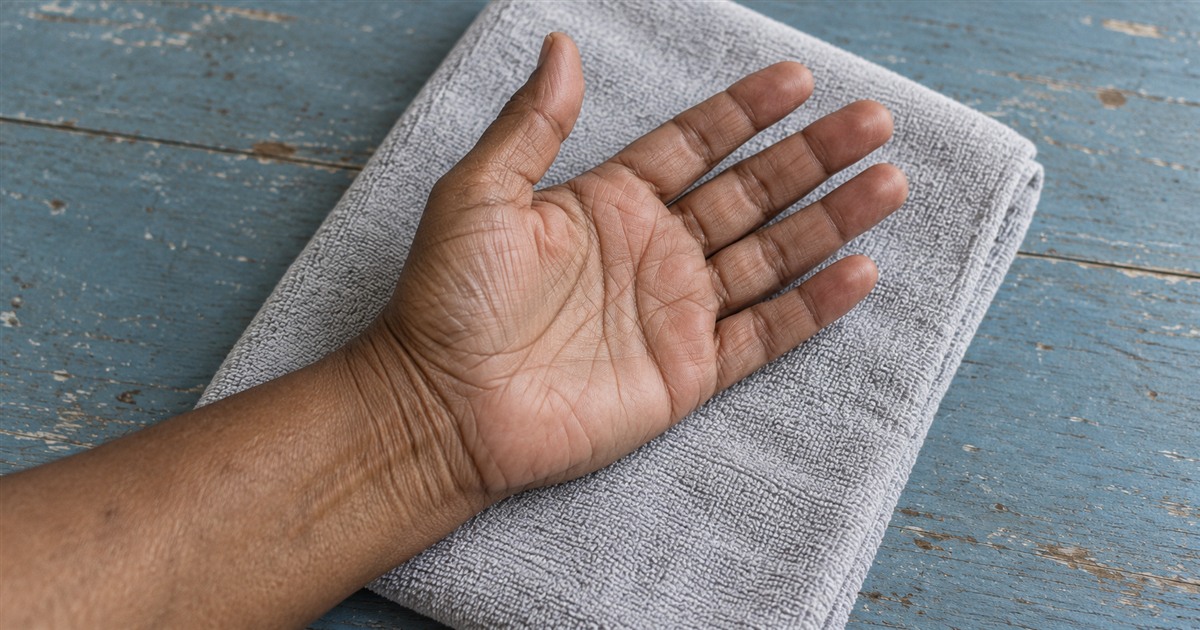
The thumb has a prominent place in palmistry. Sometimes called the “king of fingers” in hand-reading language, it draws attention to themes such as determination, flexibility and the way a person approaches choices. Looking at it can be an interesting starting point for spiritual reflection—but it cannot tell you everything about a person.
A long, short, straight or flexible thumb is not a verdict on intelligence, kindness, loyalty or success. If you enjoy palmistry, use its symbols to open a conversation rather than close one. The person whose hand you are reading should always have room to say, “That does not describe me.”
What palmists look for in the thumb
Hand-reading traditions consider relative length, shape, comfortable movement and the thumb’s resting position. These are different observations, not seven mutually exclusive personality types. Someone can have a relatively long thumb that also rests close to the hand, for example.
In Cheiro’s historical book Palmistry for All, the thumb is associated with will, logic and love: the tip, middle portion and fleshy base respectively. He also distinguishes supple and firm joints. These are historical palmistry associations, not established tests of character. Some judgments in older books are stigmatizing and should not be used to label people today.
Explore these seven features as gentle reflection prompts. The questions are invitations you can choose to explore, not claims that a particular body shape caused a personality trait.
Seven thumb features and a gentler way to read them
1. Long thumb: determination and deliberate choices
A thumb that appears long in relation to the rest of the hand can be used as a symbol of determination. Confidence and taking on a challenge are useful themes when they become questions about actual experience.
Ask, “Where do I want to be more deliberate?” or “Which challenge deserves my effort?” Length does not measure thinking speed, mathematical talent or the ability to influence others. A worthwhile ambition still needs preparation, resources and realistic choices.
2. Short thumb: feeling and creative expression
Music, painting, poetry and other arts offer a creative theme for reflection. Ask what helps you express yourself or where you want more room for feeling.
A shorter thumb does not mean someone is indecisive, easily led or less capable. If a reading suggests a conflict between heart and mind, explore the real decision instead: “What do I feel, what do I know and what information is missing?” Neither emotion nor careful reasoning belongs to only one hand shape.
3. Firm or “hard” thumb: persistence with room to adjust
Completing a task and thinking before acting are useful themes to explore. As a symbol, firmness can invite reflection on commitment: “What am I willing to keep working on?” It can also invite a second question: “When would changing my approach be sensible?”
Do not turn this into a claim that a person lacks imagination or warmth. “Hard” is an imprecise reading label, not a reason to press on someone’s thumb. Notice comfortable movement only; persistence is better understood through the commitments a person actually makes.
4. Supple or “soft” thumb: adaptability with boundaries
Adaptability and a cordial manner offer positive themes for reflection. You might use suppleness as a reminder to ask, “Where can I make room for another perspective?” or “Where do I need a clear limit rather than another compromise?”
Joint movement and the feel of skin are not the same feature, so ask what a reader means by “soft.” Neither can establish generosity, emotional flexibility or a talent for gaining wealth. A person may be accommodating in one situation and firm in another.
5. Open resting position: space and independence
You may encounter readings that call a wide thumb angle “ideal” and link it with patience and kindness. There is no need to rank a hand as ideal. If the thumb rests comfortably away from the index finger, you can explore openness as a symbol rather than a score.
Ask, “Where would more space help me?” That might mean time to consider an invitation, room for a creative project or a respectful boundary. Do not pull the thumb toward the wrist or try to reach a required angle. A posed photograph is not a fair personality assessment.
6. Straight thumb: steadiness without stereotypes
A relatively straight-looking thumb can become an image of steadiness: following through, keeping a promise or maintaining a routine. Ask, “Which commitment matters to me, and can I realistically keep it?”
Reject warnings that people with straight thumbs make unsuitable friends or may seek revenge. Thumb shape cannot establish dangerousness or tell you whom to avoid. If someone’s behavior concerns you, consider that behavior and your safety—not a hand-reading label.
7. Close resting position: a moment to consider limits
A thumb resting nearer the hand may be described with angle-based language in some readings. Here, use it only as a visual prompt about limits: “What do I want to keep private?” or “Do I need more time before saying yes?”
A narrower resting position is not a sign of despair, poor character or a problem with the self. Do not assume someone is guarded because of their hand. If the person is willing to talk, listen to their own account; if they are not, respect that choice.
How to observe without forcing or judging
- Ask permission. Do not hold, touch or photograph another person’s hand without consent.
- Use a relaxed position. Rest the forearm comfortably with the palm visible. No pulling, pushing or flexibility challenge is needed.
- Describe before interpreting. “The thumb rests near the index finger” is an observation. “You never trust anyone” is an unsupported judgment.
- Choose one question. Let the person decide whether the symbolic theme fits, rather than trying to make every feature significant.
- Return to real experience. Discuss an actual choice, value or habit. Stop when the exercise no longer feels helpful.
The NHS guidance on joint hypermobility advises against overextending joints simply because you can. Palmistry is not a reason to test your limits or a way to diagnose a joint condition. If you have pain, stiffness or concerns about movement, seek appropriate healthcare advice rather than interpreting symptoms spiritually.
Can a thumb reveal love or compatibility?
You may enjoy a shared reading as a conversation about values. Determination might lead to a discussion of future plans; flexibility might lead to a discussion of compromise. Neither feature tells you what a partner secretly feels, whether they will be faithful or whether the relationship should continue.
Try asking each other, “When do you need time to think?” or “How can we disagree while keeping respect?” Answers and consistent actions tell you more about the relationship than matching thumb types. Our guide to healthy boundaries explores how to make those needs clearer.
Other hand features can add to a symbolic reading without becoming predictions. For a different focus, see our bracelet-line guide, which looks at wrist creases and reflective themes. Keep the two observations separate; one does not prove the other.
If you plan to consult a reader, preparing your questions and limits before a reading can help you keep the conversation useful. You can decline frightening labels, disagree with an interpretation or end the session.
Knowing a person takes listening, time and attention to how they treat others. A thumb can provide a symbol for reflection, but it should never replace that human understanding. Keep the curiosity, leave the fixed verdicts behind and let the person tell their own story.
I appreciate the detailed descriptions, but I’m curious about the scientific basis behind these claims.
Indeed, it would be beneficial to have more empirical evidence supporting these assertions.
The descriptions provide a unique framework for personality analysis, though it would be insightful to compare these views with modern psychological assessments.
It’s compelling how thumb types are linked to artistic and technical abilities. Further studies could enrich this understanding.
The attributes assigned to ‘hard’ and ‘soft’ thumbs highlight a balance between decisiveness and adaptability. It’s an intriguing dichotomy.
The classifications of thumb types appear to be quite comprehensive. It would be interesting to see how these traits manifest in real life.
While the correlations drawn between thumb types and personality traits are intriguing, more research might be needed to substantiate these findings.
The article provides an interesting perspective on the significance of thumb characteristics in personality assessment.
The connection between an ‘ideal thumb’ and self-control is particularly fascinating. I wonder if there are cultural variations in these interpretations.