

SPIRITUAL SELF-CARE / WATER AND INTENTION
After a demanding day, a bath can mark the moment you stop carrying everything into the evening. For someone who works with spiritual energy, that pause may become a cleansing ritual: a chance to release what feels heavy, listen inward and welcome a more peaceful intention.
You do not need an elaborate recipe or a bathroom full of special objects. Plain water, a comfortable setting and a few thoughtful words can be enough. The purpose is not to prove that you have removed invisible negativity. It is to give your spiritual practice a gentle, practical place in your day.
If conversations or crowded spaces often leave you feeling drained, avoid assuming that another person has bad energy. You may need quiet, a clearer boundary or time to process your own feelings. Our guide to coping as an empath explores ways to stay compassionate without taking responsibility for everyone around you.
What makes a bath spiritual?
An ordinary bath focuses on washing. A spiritual bath adds a chosen meaning: perhaps renewal, self-compassion, gratitude or the decision to leave a difficult conversation behind for tonight. You might begin with a prayer, imagine water carrying away the day’s tension, or sit quietly with a single intention.
The difference is your attention, not the number of ingredients. A bath does not have to feel mysterious to be meaningful. Nor does it have to last an hour. You can spend time preparing and reflecting outside the water, keeping the bathing part short and comfortable.
Prepare the space before you enter the water
A little preparation helps you keep your attention on the experience rather than searching for a towel or stepping around clutter.
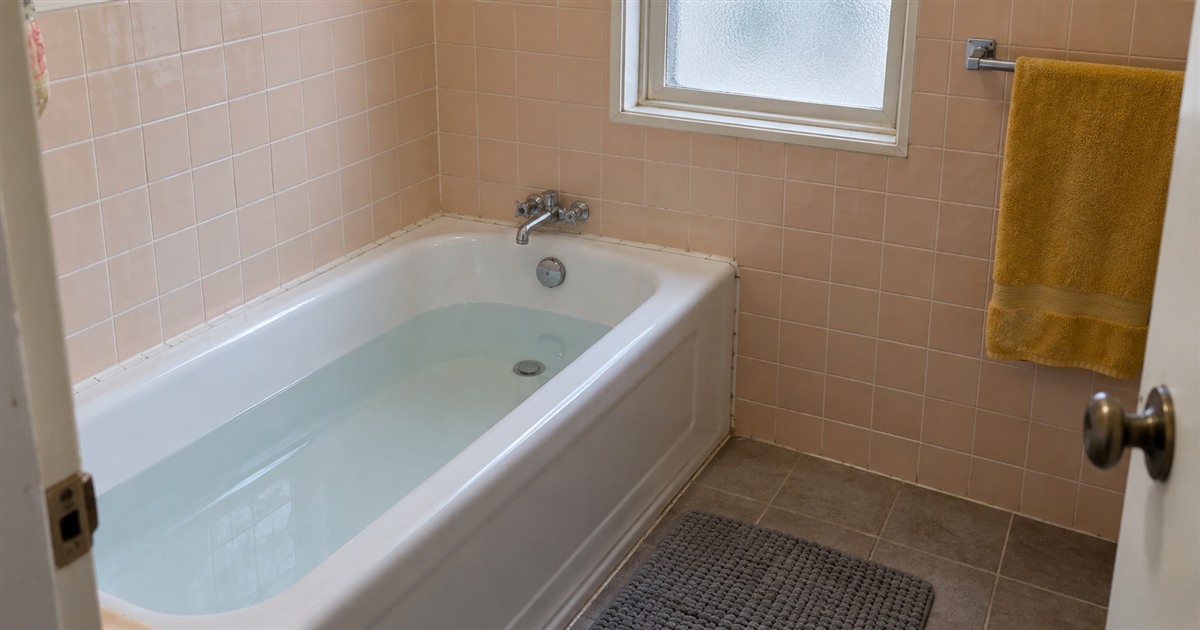
- Clean the tub and clear the route. Remove clutter from the floor and rinse away cleaning products before bathing. Arrange a stable, nonslip way to get in and out.
- Put essentials within comfortable reach. Have your towel and ordinary skin-care products ready. Place anything decorative on a dry, stable surface, not on an edge where it could fall.
- Choose comfortable water. Use warm rather than hot water. Do not make heat or endurance part of the ritual.
- Keep electricity away. Leave plugged-in devices and chargers away from the bath. If you want music, set it up safely away from water before you begin.
- Favor a flame-free atmosphere. A warm room light can be enough; if you like candlelight, consider battery-operated candles positioned away from splashes.
The U.S. Fire Administration’s candle guidance recommends considering battery-operated flameless candles. You do not need incense or a real flame to make this moment sacred.
Instrumental music may help you settle, but it is not a rule. Silence, nature sounds or a familiar gentle song may suit you better. Choose what allows you to feel present, not what you think a spiritual person is supposed to enjoy.
Choose symbolism without a complicated ingredient recipe
Salt, lavender, roses and carnations often appear in modern personal bath rituals. You can use their symbolism without putting them in the water. There is no ingredient that everyone needs, and “natural” does not automatically mean suitable for your skin.
- Salt: renewal and a fresh boundary. If you enjoy a bath-salt product, choose one made for bathing and follow its label. Plain water is equally suitable for the intention. There is no need to use several cups or combine multiple products.
- Lavender: a reminder to pause. A picture, the color lavender or a nearby decorative sprig can represent calm. You do not need essential oil on your skin.
- Roses: kindness toward yourself. A rose in a vase outside the tub can accompany an intention to speak to yourself more gently.
- Carnations: tenderness and care. Their color can inspire a reflection, but they do not cure heartbreak. You can leave the flowers on a dry shelf rather than adding them to the water.
- Herbs: a personal association. Choose a symbolic word or image if you are unsure about an herb. Do not assume every plant is appropriate to soak in.
Skip large homemade baking-soda doses, milk-and-honey mixtures and loosely chosen herb combinations. They are not required for spiritual cleansing. Loose plant material can also make cleanup harder. A simple, familiar bathing routine leaves more attention for the meaning you want to create.
Avoid adding neat essential oils directly to bathwater or improvising an oil mixture. Poison Control explains that essential oils can cause irritation or allergic reactions and can be harmful when misused. If you use any scented bath product, follow its directions and avoid ingredients that have bothered your skin or breathing before. Keep oils and bath products away from children and pets.
Crystals can stay dry nearby as visual reminders. They do not need to go in the bath, and not all stones tolerate water or products. Our guide to using crystals in your home includes ways to give a stone meaning without turning it into a required tool.
A seven-step spiritual bath ritual
This is a personal intention-setting practice, not a ceremony attributed to a particular religious or cultural tradition. Adapt it to your beliefs and comfort.
- Name what you are setting down. Before bathing, complete the sentence: “For this moment, I am setting down…” Be specific, such as the urge to replay a disagreement.
- Choose what you want to welcome. Select one quality: patience, steadiness, self-respect or rest. You do not need to solve your whole life tonight.
- Begin with an ordinary wash. Use the cleansing products you normally tolerate. Simplicity is welcome.
- Let the water become a symbol. If it feels helpful, imagine the water supporting a fresh start. You can also simply notice its warmth and the quiet around you.
- Repeat a short intention. Try “I can care without carrying everything,” or use a prayer from your own faith. You do not have to force a special sensation.
- Finish while you are comfortable. End the bath rather than extending it to meet a spiritual target. If you feel unwell, stop; do not treat discomfort as proof of cleansing.
- Close outside the tub. Dry off, use your usual moisturizer if appropriate, and write down one small action that supports the intention.
For dry skin, the American Academy of Dermatology recommends warm water and baths or showers of five to ten minutes, followed by gentle drying and suitable moisturizing. A long soak is not spiritually superior. If you have a condition that affects safe bathing, follow your clinician’s advice rather than a ritual timetable.
Three intentions you can connect to everyday action
The closing action helps the ritual continue beyond the bathroom. Choose something modest and within your control.
- After a demanding conversation: “I release the need to answer immediately.” Action: decide when you will return to a nonurgent message.
- During heartbreak: “I welcome tenderness without abandoning myself.” Action: arrange a supportive conversation or put away something you are repeatedly checking.
- Before a new beginning: “I welcome one honest step.” Action: prepare the question, appointment or short task you can approach tomorrow.
You can feel sad and still have a worthwhile ritual. You do not need to replace grief with instant gratitude. A gentler goal is to make room for your feelings while choosing how to care for yourself.
For a broader routine around these moments, explore psychic-inspired self-care practices. A bath works best as one option among many, not the only way to reconnect.
No bathtub? Try a shower or a dry reflection
During a short, comfortable shower, use the same two sentences: what you are setting down and what you are welcoming. Imagine the water marking the end of the day’s demands if that symbolism resonates. Keep products familiar, and do not feel obliged to add oils, herbs or extra heat.
If bathing is not comfortable or accessible, sit somewhere supported and wrap a towel or soft blanket around your shoulders. Notice the room, say your intention and write your next caring action. You can use a picture of water instead. The practice belongs to you; it does not depend on a particular bathroom or purchase.
What to notice afterward
Ask three simple questions: What feels different? What still needs attention? What will I do next? Perhaps you feel quieter. Perhaps you realize that rest is not enough and you need to discuss a boundary. Perhaps nothing dramatic happens, but you appreciate having given yourself a pause.
If the same drained feeling keeps returning, look at the circumstances as well as the ritual. Our article on feeling that your energy is blocked offers reflection on fading, scattered and guarded energy without treating those images as diagnoses.
A spiritual bath can be a loving way to mark renewal. Let it be simple, safe and honest: a moment to honor your inner life, followed by a small choice that supports the person stepping back into the day.
Spiritual baths seem like a useful ritual for mental and emotional cleansing. I appreciate the detailed instructions and ingredients given in the article.
It’s also fascinating how different elements like salts and herbs can contribute to energy cleansing.
Agreed. The instructions are clear and simple to follow. I think it could be a valuable addition to one’s self-care routine.
The idea of setting intentions during a spiritual bath resonates with me. Mindfulness and intention-setting can have a profound impact on one’s mental state.
The recommendation to use instrumental music during the spiritual bath is a neat idea. Music has a strong influence on emotions and energy.
I have always been curious about the impact of environmental energies on our well-being. It’s refreshing to see practical advice for managing it.
Absolutely. Knowing how to cleanse and recharge our energy can be really empowering.
Practical steps like these can make it easier to incorporate energy management into daily life.
Has anyone tried the spiritual bath with these specific ingredients? I’d love to hear about personal experiences and results.
The concept of energetically interacting with different people and environments is intriguing. I wonder if those energies can be quantified in any scientific way.
It would be interesting to see scientific studies that explore this further. Energies and vibrations are often considered more of a metaphysical concept.
Yes, some research on biofield science attempts to measure subtle energies, but it’s still a developing field.
I’m intrigued by the concept of vibrations in the room changing with different people’s presence. It’s something I’ve felt but never understood.
The discussion on feeling different energies from people makes me think about how we are all interconnected on a deeper level.