

How to Truly Compare Psychic Websites in 2026

Comparing Psychic Websites Can Be Confusing

If you’ve ever looked up “the best psychic websites online” in Google, chances are that you’ve probably seen some strange things. The lists might look different, but they feel the same, offering the same kinds of promises, the same kinds of star ratings, and the same declarations that they are the best of the best.

But when you talk to real people who have had their own psychic readings, they tell you something completely different.

Why “Best Psychic” Lists Can Be Tricky

The Illusion of “Best Psychic” Lists

Comparison articles online will treat psychic websites as if they can be ranked the same way as laptops or credit cards. Lower price means better value. Higher ratings mean a better experience. More psychics means more choice.

But psychic readings don’t work like consumer products.

One person’s life-changing reading can be another person’s confusing conversation. A psychic who feels deeply aligned with someone processing grief may feel completely off to someone asking about career direction. The reading itself isn’t the only factor. The client’s emotional state, expectations, timing, and communication style all shape how the experience lands.

That’s why two people can use the same platform on the same day and walk away with completely different impressions.

A Psychic Website Isn’t a Product

Psychic platforms aren’t single experiences. They’re ecosystems made up of individual readers, pricing structures, platform rules, interface design, and subtle emotional cues. Everything from how refunds are explained to how a reader is introduced influences how safe, rushed, hopeful, or skeptical someone feels before the session even starts.

It’s similar to dating apps. The app itself doesn’t create chemistry. It just sets the conditions where chemistry might happen. Psychic websites work the same way. Some are built for slower, more reflective conversations. Others prioritize speed, volume, and constant availability.

Neither approach is wrong. But they create very different experiences.

A Normal First-Time User Experience

This is a familiar scenario. Someone new to psychic readings opens three tabs: a well-known legacy network, a sleek mobile app, and a comparison site promising “unbiased rankings.” Within minutes, they feel overwhelmed. Prices jump around. Every psychic sounds confident. Reviews blur together. Curiosity quietly turns into anxiety.

At that point, the real question isn’t, Which psychic website is best?” It’s, “Which environment actually supports the kind of guidance I’m looking for right now?”

That question rarely gets answered when looking at standard comparison lists. And that’s exactly what this article is here to talk about.

Understanding Online Psychic Platforms

Before comparing individual psychic websites, it helps to understand what most platforms really are behind the scenes. Many frustrations, disappointments, and even surprisingly positive experiences make much more sense once you see how the marketplace itself is set up.

Marketplace-Style Platforms Versus Curated Networks

At a broad level, most psychic websites fall into one of two models: open marketplaces or curated networks.

Marketplace-style platforms function like large digital bazaars. Psychics sign up, build profiles, set their own prices, and compete for visibility. The platform mainly provides traffic, payment processing, and communication tools. Quality can vary, and not because the readers aren’t good, but because the screening only gives a few incentives, and they pick availability over depth.

Curated networks work differently. They limit the number of people that can join, they have strong screening standards, and they guide pricing and session formats. This can mean fewer choices but more consistency in professionalism, expectations, and tone.

Neither model is better than the other. They simply meet different emotional needs. Marketplaces support exploration and flexibility. Curated networks offer containment and predictability.

What an Independent Psychic Means Online

Many platforms describe their readers as independent psychics, which can sound empowering and authentic. In practice, that independence exists within constraints. Platform rules, visibility algorithms, availability expectations, and pricing pressure all influence how a reader shows up in a session.

This matters because intuition doesn’t operate in a vacuum. A gifted reader, moving through back-to-back sessions for hours, may still be accurate, but the energetic quality of the reading can feel very different from one offered in a slower, more contained setting.

Clients often sense this instinctively, even if they can’t quite explain why.

Bigger Doesn’t Mean Better

Large platforms promise abundance: thousands of psychics, instant access, endless options. But scale introduces subtle trade-offs. Readers compete more intensely for attention. Sessions tend to shorten. Emotional pacing speeds up.

Smaller platforms feel quieter. There’s usually less urgency, fewer flashing offers, and a slower rhythm overall. For some people, this feels grounding. For others, it can feel limiting.

The mistake many comparison articles make is assuming that bigger automatically means better. In reality, scale reshapes the emotional tone of the entire experience.

Online Platform Examples

Imagine two people looking for guidance after a breakup.

One logs into a large platform late at night, scrolls through dozens of profiles, and chooses someone who’s available immediately. The session is reassuring and focused, but emotionally light.

The other schedules a session on a smaller network, waits a day, and speaks with a reader who asks fewer questions but listens longer. The insight unfolds more slowly but feels deeper.

Neither experience is wrong. They’re simply shaped by different marketplace designs. Once this is understood, comparing psychic websites becomes less about rankings and more about alignment.

Why Many Psychic Comparison Articles Are Wrong

If psychic comparison articles reflect how people experience their psychic readings, most of them would look different. Instead, they have the same patterns, and as the platforms change, the clients’ expectations change.

Price Per Minute

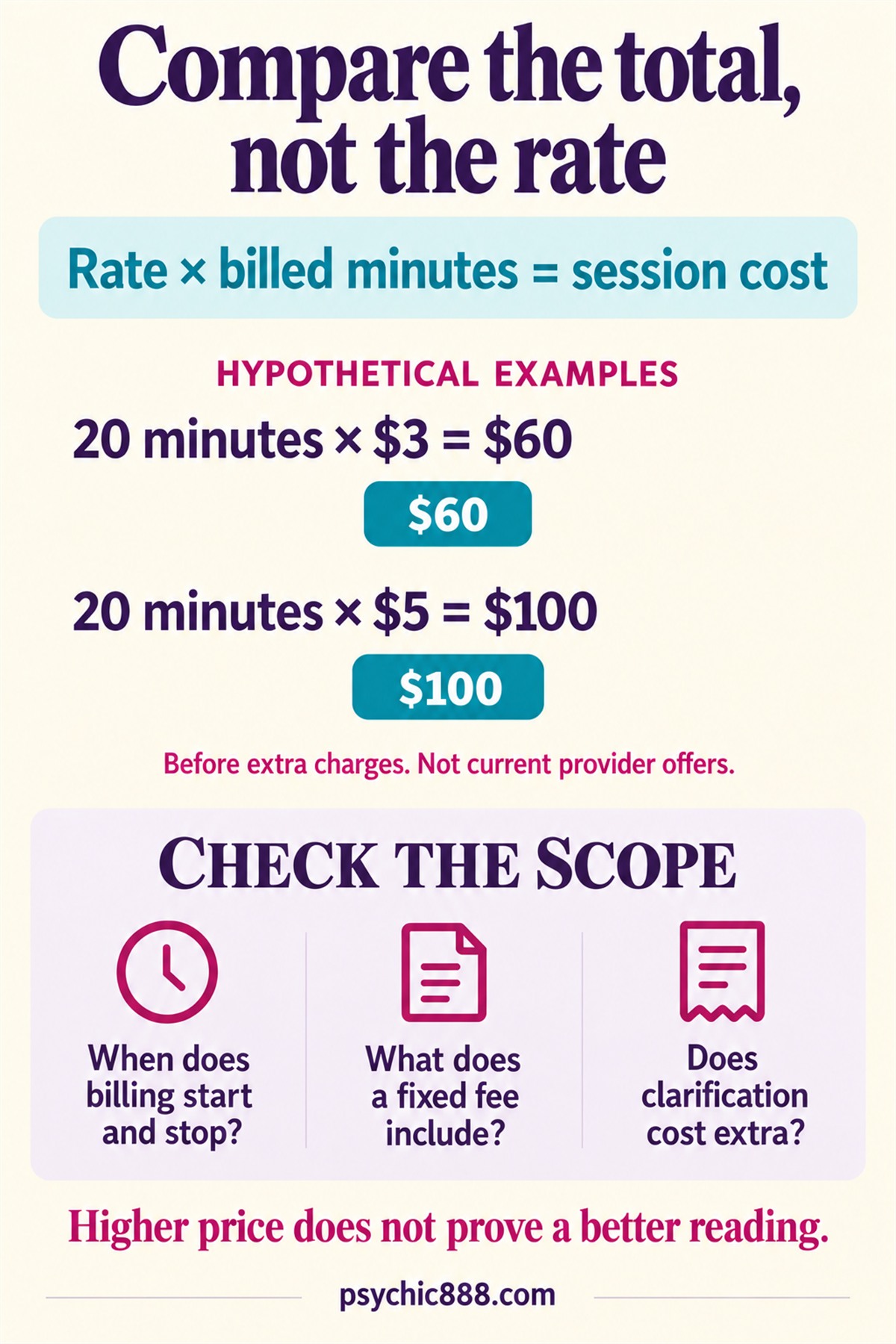
Price is one of the biggest things that people want to compare, and so it dominates most of the lists online. Having lower rates is looked at as more valuable, and higher rates are seen as better quality.

Clients don’t normally remember what the reading cost them per minute, but they usually remember what they felt like afterwards.

Getting a reading that is 10 minutes but is rushed at a low rate can feel like it costs more than a more expensive reading that is calm and emotional. When time pressures come into the reading, intuition often leaves.

Of course, price does matter, but not when it comes with isolation. Context, pacing, and emotional safety matter even more than price.

Customer and Star Ratings

Getting a five-star rating might look reassuring, but it also doesn’t always tell what people need to know. Psychic readings can be about intimate conversations and non-standardized services. Two clients might get the same insights and rate them differently based on things like expectations, mood, or readiness.

What is missing when comparing these sites is the emotions behind them. If the reader felt present, if the client felt rushed, then these things should show a reflection of the platform.

Numbers can’t answer these questions, but they are ones that clients really do care about.

Having Choice Overload

When a site has more psychics, some people feel that this is a benefit. Thousands of different psychics to look at, profiles, endless filters, and constant availability. Many people, though, feel that this is overwhelming, and it causes them to have anxiety and not empowerment.

Decision fatigue can happen fast in these situations, especially when emotions are already high. Instead of getting clarity, clients feel pressured to pick the right psychic as if picking wrong will cause them to miss their one chance at getting good insight.

Platforms that limit the choices can reduce stress, even if comparison articles penalize them for doing that.

Ignoring Energy

Psychic readings are built on resonance. Tone, communication style, and emotional pacing matter just as much as insight. Yet most comparison articles act as if any reader on a platform can be swapped for any other. They can’t.

Some readers are deeply validating. Others are direct and concise. Some connect best through chat, while others need voice or video to fully tune in. Ignoring these differences misleads clients and flattens the experience into something belief-based work was never meant to be.

Comparison Sites Can Make Mistakes

Comparison sites are designed for search engines, not human experience. Metrics are easy to rank. Feelings aren’t. But psychic work exists almost entirely in the space that metrics can’t measure.

That’s why so many people bounce from platform to platform, searching for alignment they were never taught how to recognize.

Five Layers of Comparison

Instead of ranking platforms by surface-level features, it’s more useful to look at the layers shaping a client’s experience before, during, and after a reading. These layers are always present, whether a platform acknowledges them or not.

Layer One: Trust Architecture

Trust forms long before a psychic speaks. It begins with how clearly a site explains what to expect, how it handles dissatisfaction, and how transparent it is about pricing and limitations.

When policies are vague or buried, clients enter readings slightly guarded. When expectations are clear, the nervous system relaxes. That alone can deepen the session.

Trust architecture isn’t about promises. It’s about reducing uncertainty, so intuition has space to emerge.

Layer Two: Psychic and Philosophy

Some platforms treat psychics as interchangeable service providers. Others see them as representatives of a shared ethical and energetic standard.

Onboarding philosophy shapes how readers introduce themselves, how they handle sensitive topics, and how consistent the emotional tone feels across the platform. When onboarding is intentional, experiences tend to feel steadier, even when individual styles differ.

This doesn’t make one approach better than another. It simply makes outcomes more predictable.

Layer Three: Having Emotional Safety

Psychic readings involve vulnerability. Platforms vary widely in how they protect that space. Does the interface feel rushed or calm? Are clients encouraged to reflect, or immediately prompted to book again? Are boundaries clearly stated when fear, dependency, or distress come up?

Emotional safety doesn’t mean avoiding difficult insight. It means offering it without destabilizing the person receiving it.

Layer Four: Reading Format and Reading Flow

Phone, chat, video, and scheduled sessions each create different emotional and psychological dynamics.

Chat allows space and privacy. Voice conveys warmth and nuance. Video creates presence and immediacy. Scheduled sessions reduce urgency while increasing intentionality.

Platforms that limit format limit who they truly serve. Flexibility acknowledges that intuition moves differently through different channels.

Layer Five: After-Reading Action

A reading doesn’t end when the session does. Incorporation matters. Does the platform encourage grounding? Is there space to revisit insight? Or does it immediately push the next transaction?

Clients who feel supported afterward are more likely to trust the experience as a whole, regardless of the specific message they received.

Why These Different Layers Matter

Most dissatisfaction with psychic platforms isn’t about accuracy. It’s about how the experience felt.

These five layers shape that feeling far more than star ratings or price comparisons ever could.

Online Psychic Industry

Before there were apps, instant chat, and algorithms, online psychic services were based on phone networks or in-person. The earlier platforms helped to shape the industry into what it is today.

PsychicOz

PsychicOz

PsychicOz is a long-standing psychic network that combines traditional phone-based readings with other modern formats. It helps to create an experience that is grounded and not just a performance. This platform works with phone, email, chat, and video readings, and this shows that intuition doesn’t just happen with a single format. Some clients might get better insight when they are having a spoken conversation, while others might need text so that they can re-read it later. Others might feel more connected when they do a video reading and can see the reader. By having multiple formats to choose from, the platform allows clients to pick which kind of environment feels the safest to them and their emotional state.

PsychicOz network emphasizes consistency and screening. This helps to shape the overall experience. Reader profiles are detailed and structured, and clients are able to have expectations before the reading starts. Reviews are visible and are framed around what the clients experienced and not based on hype or excitement. This can help to get rid of anxiety that can come before a reading. This curated way helps to get rid of extremes, making the readings less common on open marketplaces. It is important to remember that chemistry is still important.

Psychics on this platform work with clear ethical and emotional boundaries, and the readings focus on guidance, reflection, and clarity instead of dramatic predictions or fear-based language. For clients who are dealing with relationship situations, career decisions, or emotional changes, this can help to bring stability. The tone can encourage belief without demanding the client to have blind faith, and this is great for clients who are curious but cautious.

At the same time, the platform means that the experiences aren’t all the same. Some clients will feel that the conversation is deep and grounded, while others feel that the reading was broad but supportive. These differences aren’t flaws, but they are a reflection of human nature and intuition. Overall, PsychicOz is part of the psychic world, offering an emotionally steady environment that blends tradition, credibility, and accessibility, making it a great place to compare when comparing online psychic networks.

Psychic Source

Psychic Source has been around for a long time, and you can feel that in how the platform works. It leans into a traditional setup, especially phone readings, and doesn’t try to reinvent the experience. For many people, it feels grounding. It’s straightforward and familiar, more like calling a service you trust than stepping into something unknown.

The platform is known for having standards around who reads there, which gives the experience a steady tone. Most sessions don’t swing to extremes. They aren’t very dramatic, but they can feel chaotic or confusing sometimes. Clients who want clear answers and calmness might feel that this consistency is reassuring.

Because the platform is mostly focused on phone readings, the readings move at a steady pace. Psychics can respond directly to questions instead of looking for broad themes. This works well for people who know what they want to ask before they get a reading. If you’re someone who needs to take time to pause or to process emotions, this pace might seem too fast.

Psychic Source appeals to people that are wanting clarity, reassurance, and practical guidance. They don’t push a spiritual language, and they don’t make dramatic predictions. Instead, they treat psychic insight as something grounded and supportive. The site is comfortable and a good place to start, even if clients want to try other platforms later.

Keen

Keen is one of the largest marketplaces, and it offers a wide range of readers, specialties, prices, and availability. This creates a place that can feel either empowering or overwhelming, depending on what the client is looking for. For those who want to have choices and immediacy, Keen’s structure can give them that. There is almost always someone who is available to do a reading, 24/7.

Since Keen is like a marketplace, there are different levels of experiences. Some psychics have great skills, some are communicators, some have years of experience, and some are new. Screening is there, but it is lighter than other networks, and this means it is more up to the client to evaluate the profiles, look at the reviews, and to listen to discernment and instinct. This gives users the freedom that want to explore the different styles and to make their own opinions instead of those that rely on platform curation.

The site emphasizes speed and flexibility, and clients can filter what they are looking for by reading style, topic, and availability, or they can just pick a session fast. This works well for situational questions or times when the client feels emotional urgency, but it can also feel like a transaction. Readings might feel more focused, shorter, and less reflective, especially when psychics are managing high demand. For emotionally complex problems, some clients report needing to slow down and to not feel rushed.

Keen attracts a lot of different clients, from skeptics who are looking to see if the psychics have intuition to those who are first-time clients. They even get people who have explored the psychic world. This site doesn’t attempt to frame belief or spiritual meaning, but it provides a place where people can decide on their own. For some, this feels freeing, and for others, it can feel impersonal. Keen’s strengths are their variety and access, but the effectiveness of the reading depends on the client’s ability to pick the right psychic.

Kasamba

Kasamba is a platform that is built around written readings, and that changes how the experience feels from the start. Everything happens through chat, which gives clients space. You can pause, think, reread, and respond when you’re ready. For people who don’t like talking things out loud or who need emotional distance while sorting through something sensitive, this format can feel more comfortable.

This platform is really popular for love and relationship readings and questions. Some readers focus on communication, uncertainty, and patterns in the connection. Since the whole reading is written, the readings go slowly. Psychics will often ask follow-up questions and build more on the reading as time goes on, instead of going right to a conclusion. This pacing can feel calm for clients who get overwhelmed quickly or have a hard time with fast conversations.

Kasamba operates as an open marketplace, which means experiences can vary a lot. Some readers are very skilled at expressing intuition through writing and can be specific and thoughtful. Others rely on broader language that may feel vague if a client is looking for clear detail. On this platform, reviews matter less for “accuracy claims” and more for how a reader communicates, since written intuition depends heavily on tone and clarity.

Overall, Kasamba tends to suit people who value privacy and reflection. The experience is quieter and less emotionally charged than a phone or video reading. For clients who like having space to process and revisit messages later, that’s a benefit. For those who want warmth, vocal reassurance, or a stronger emotional presence, the experience can feel a bit distant.

California Psychics

California Psychics presents itself as structured and professional, and that tone carries through the entire experience. From the way the site is organized to how readings unfold, everything feels contained and intentional. It’s less about exploration and more about guidance, which often appeals to people who are curious about psychic readings but cautious about exaggeration or emotional intensity.

The platform places strong emphasis on screening and consistency. Readers are positioned as vetted advisors, not independent freelancers, and that creates a more uniform experience. Sessions usually focus on emotional grounding, clarity, and practical insight rather than dramatic predictions or mystical language. For some clients, this feels stabilizing and trustworthy. For others, it can feel a little restrained.

Most readings happen through phone or chat, and conversations tend to stay focused. Psychics often guide sessions gently, asking clarifying questions to keep things on track. This works well for clients facing decisions around relationships, work, or personal direction. The experience can feel more like a calm consultation than a spontaneous, intuitive exchange.

Emotionally, California Psychics attracts people who value predictability and emotional safety. The platform doesn’t push belief or promise transformation. Trust is built slowly through consistency. Some clients report feeling deeply supported, while others feel the sessions lack depth or surprise. California Psychics tends to work best for people seeking steady, grounded support rather than dramatic or mystical experiences.

Kasamba

Kasamba has long positioned itself as a chat-first psychic platform, and that design choice strongly shapes how readings unfold. Text-based communication creates a different emotional dynamic than phone or video, often giving clients a greater sense of control. There is time to pause, reread messages, and reflect before responding. For people who feel self-conscious speaking out loud or who want emotional distance while processing sensitive topics, this format can feel safer and more contained.

The platform is especially visible in love and relationship readings, and many psychics tailor their profiles and tone toward romantic concerns, emotional uncertainty, and recurring connection patterns. This specialization attracts clients who are navigating relationship anxiety and want reassurance delivered in a gentler, less confrontational way. Because communication is written, psychics often ask clarifying questions and build insight gradually rather than delivering rapid-fire statements.

Kasamba operates as a marketplace, which means reader quality and depth vary. Some psychics are highly articulate and intuitive writers who convey nuance with precision. Others rely on broader language that can feel generic if the client is seeking specificity. Reviews become particularly important on this platform, not just for accuracy claims, but for tone and communication style, since written intuition requires a different skill set than spoken guidance.

Emotionally, Kasamba tends to attract clients who value privacy, reflection, and emotional pacing over immediacy. Readings often feel less intense than live calls, but also less immersive. For clients who want space to think and revisit insights later, this can be a strength. For those seeking emotional warmth or vocal reassurance, the experience may feel distant. Kasamba’s effectiveness depends largely on how well a client resonates with written intuition and their ability to choose a reader whose voice feels authentic rather than scripted.

California Psychics

California Psychics is known because of its structure and strong emphasis on screening, which makes it one of the most recognizable curated networks in the psychic industry. The platform shows that psychic readings are a guided service and not just an open marketplace, and this influences how clients get their readings right at the start. The psychics are professional, calm, and reassuring, which often works for those who are curious about psychics but are worried about them exaggerating or being too emotional.

The screening process is part of California’s Psychics brand identity. Psychics are vetted advisors, not just independent operators. This creates a sense of uniformity throughout the network. Clients don’t have to encounter wide, wild styles or experience extremes when they get a reading. Readings focus on emotional grounding, clarity, and insight instead of mystical language or dramatic prophecies. For some clients, this feels comforting and credible, but for others, it can feel too restrained.

California Psychics uses phone and chat readings, and this allows the sessions to flow with focus and pacing. Psychics can guide the conversations in a gentle way, asking targeted questions to make sure that they are giving their clients clarity. This works well for those who are dealing with relationship, career, or personal growth questions. The experience can feel more like a guided consultation instead of just intuitive exchanges.

This platform often attracts clients who want emotional safety and professionalism over spiritual exploration. It doesn’t push belief or make outrageous claims, but it allows the clients to build trust through consistency. While some clients feel that their session was deeply affirming, others feel that the experience lacks depth. California psychics tend to work better for clients who want grounded and steady support instead of transformational or mystical experiences.

Purple Garden

Purple Garden feels more like a social app than a traditional psychic service. Everything about it is built for quick access and visual engagement. Profiles are image-forward, availability is front and center, and starting a session feels casual rather than ceremonial. For many users, especially those who are comfortable with apps and fast interaction, this makes getting a reading feel less intimidating.

The platform offers chat, voice, and video, but speed is really the heart of the experience. Readings often begin quickly, sometimes on impulse, which can be helpful when someone wants reassurance in the moment. The trade-off is depth. Because the readings move fast, psychics keep the insight short and focused. This works great if there are specific questions, but it can feel limited if someone needs more emotional exploration.

Purple Garden is an open marketplace, so experiences vary widely. Some readers bring a strong presence and clear insight. Others lean on broad reassurance. Because the app is so visual, personality and delivery matter a lot. Clients often notice right away whether they connect with a reader’s energy or not, and chemistry plays a bigger role here than on more structured platforms.

Emotionally, Purple Garden tends to attract people who want intuitive input woven into everyday life. It’s good for quick check-ins or emotional validation, but it can feel rushed for those who want a quieter or more reflective experience. This platform shows how technology can make intuition feel accessible and immediate, but can also make it feel more on-demand than emotional.

Oranum

Oranum is known because it happens in public. Instead of focusing on private sessions, this site centers around live video streams where psychics read, talk, or perform rituals in real time. This helps to create a place that feels more like a digital spiritual thing than a private reading or service.

Live video allows clients to watch psychics before booking, which helps build familiarity and reduce uncertainty. You can see how a reader speaks, moves, and interacts before deciding to engage more deeply. For some users, this feels reassuring. For others, the public setting can blur the line between insight and performance.

Oranum is an open marketplace, and this means that reader quality and approach vary a lot. Some psychics balance presence and insight thoughtfully. Others focus more on keeping attention and drawing in viewers. Clients who enjoy observing and deciding slowly can navigate this well. Those who prefer privacy and quiet reflection may find the environment overwhelming.

Emotionally, Oranum appeals to people who enjoy shared spiritual spaces and interactive energy. It works well for learning, watching, and gradually building trust. For deeply personal conversations, the shift from public to private can feel abrupt. Oranum highlights how visibility can both support and complicate intuitive work online.

MysticSense

MysticSense feels more relaxed than many other psychic platforms. It doesn’t have the formality of older networks or the intensity of app-driven services. The overall tone is approachable, with a wide range of reading styles, prices, and personalities available.

This platform works with phone, chat, and video. It gives clients a chance to choose whatever format is most comfortable for them. Some psychics will use conversations, and this can make the reading feel scripted, but this can be good for those who feel nervous about being judged or misunderstood. This is a calm environment with little pressure.

As with most marketplaces, quality can change. Some readers offer thoughtful, emotionally aware insight, while others stay more general. MysticSense doesn’t push clients strongly toward specific psychics, so taking time to read profiles and reviews usually leads to better experiences. The platform rewards patience rather than impulse.

Emotionally, MysticSense attracts people who want supportive conversation alongside intuition. It works well for those exploring spirituality at their own pace or easing back into readings after a mixed experience elsewhere. While it may not always deliver dramatic moments, it often offers a steady, human-feeling space where intuition is shared through conversation rather than performance.

BitWine

BitWine is mostly about text readings. There isn’t much atmosphere or buildup. You log in, ask your question, and read the response. For people who like simple and direct things, it can be a relief.

Since everything is written, you can slow down. You can reread messages and notice what stands out over time. Some psychics on BitWine are very good writers and can explain intuitive insight clearly. When that happens, the reading feels focused and thoughtful.

Quality does vary. Some readers go deep; others stay pretty general. Because there’s no voice or video, the words matter more than anything else. Clients who take time choosing a reader usually have better experiences than those who jump in quickly.

BitWine works best for people who want privacy and space. If you’re someone who likes to think things through quietly, it can be a good fit. If you’re looking for emotional warmth or reassurance, the text-only format may feel a bit flat.

LifeReader

LifeReader feels calm compared to most platforms. It doesn’t rush you. There’s less pressure to start immediately or keep things moving fast.

Readings happen through phone, chat, or longer written messages, and they tend to unfold slowly. Psychics usually take their time and explore themes instead of jumping straight to answers. This can be helpful if you’re dealing with something ongoing rather than a single question.

There are fewer psychics to choose from, which makes things simpler. You’re less likely to scroll endlessly and more likely to choose carefully. The tone is generally supportive and grounded, not dramatic.

LifeReader tends to suit people who want depth and continuity. It’s not ideal if you want instant reassurance, but it works well if you’re looking for steady guidance over time.

The Circle

The Circle feels more intimate than most platforms. It’s smaller and more intentional, and that shows in how readings are framed.

Astrology, tarot, and psychic insight are often blended. Readings usually focus on personal patterns and meaning rather than quick answers. For people who like reflection and symbolism, this can feel meaningful. For others, it may feel indirect.

Because there are fewer readers, the experience feels less overwhelming. Profiles focus more on approach than promises, which encourages slower, more thoughtful choices.

The Circle works best for people exploring bigger themes like identity, purpose, or long-term emotional patterns. It’s not built for urgency. It’s built for reflection.

Psychic Access

Psychic Access is built around structure and consistency. It feels more like a guided service than an open marketplace. Readings usually stay calm and steady, without dramatic language or emotional extremes. For people who’ve had unsettling experiences elsewhere, this can feel reassuring.

Most readings on this site happen on the phone. Psychics move at a measured pace, and they ask questions and then respond in a thoughtful way without rushing. This works perfectly for clients who want to have conversations and reassurance.

Because the platform is structured, experiences don’t vary wildly. That predictability can feel comforting, though it may feel limiting for people who want something more spontaneous or exploratory. Psychic Access generally appeals to clients who value boundaries, professionalism, and emotional steadiness over intensity.

AstroTalk

AstroTalk is designed like an app you check often. It blends astrology, horoscopes, and live chat into a fast, easy-to-use experience. Psychic guidance feels casual here, more like part of a daily routine than a special event.

Most readings happen through chat, which keeps things quick and low-pressure. Many advisors use astrology as their main framework, relying on charts and timing to guide insight. This can feel grounding for people who like symbolic systems and structure.

Because the platform is large, experiences vary. Some readers combine astrology with intuitive depth, while others stay general. The app’s focus on speed can lead to surface-level readings unless clients slow down and ask clear questions. AstroTalk tends to suit people who are curious and exploratory, but it may feel light for deeper emotional situations.

Psychic Vision

Psychic Vision has a more traditional feel. Readings are often scheduled, which encourages intention rather than impulse. The platform feels closer to an appointment-based service than an on-demand app.

Sessions are usually voice-based and unfold slowly. Psychics often explain what they’re sensing and how they work, which can help clients feel grounded and informed. The tone is calm and conversational.

There are fewer readers, but that creates a sense of consistency. Sessions tend to share a similar rhythm and ethical approach. Psychic Vision works well for people who appreciate structure, continuity, and a slower pace, and may not appeal to those looking for instant answers or high interaction.

Nebula

Nebula gives psychic guidance through a blended lifestyle, such as astrology, intuition, and self-reflection. It allows experience that feels like personal development and not fortune-telling. The app uses daily engagement and encourages users to check their horoscopes, compatibility insights, and intuitive prompts as part of their daily lives. This allows them to see insight as gentle and ongoing, and not intense.

Most interactions on the site are text-based, and astrology is one of the main structures where intuition comes. For clients who have a strong belief in symbols, this can create a sense of credibility. Insights can feel reflective instead of predictive and can focus on emotional patterns, timing, and self-awareness.

Nebula works great for users who are introspective, curious, and yet cautious about the readings. It works for people who want to use intuition with self-growth. For people who want direct answers, though, it might be too slow. The platform shows how psychic guidance can work as an interpretive tool instead of a fortune-telling site.

Psychics1on1

Psychics1on1 is built around video readings.  Being able to see the reader face-to-face is one thing that draws clients in. You can watch their body language, expressions, and their energy in real time, and this can make clients feel comfortable and trusting.

Because video is more personal, readings here often feel intense. Both the psychic and the client tend to show up more fully. When the connection is good, sessions can feel meaningful and validating. When it’s not, the experience can feel like too much, especially for people who prefer privacy or emotional distance.

This platform works best for clients who want to be heard and seen. It’s not as great for those who want to ask really private questions, but it is good for those who want a real-time connection.

Asknow

Asknow brings together psychics from different parts of the world, and that diversity shapes the experience. Readings are usually done by phone and feel practical rather than mystical. The tone stays grounded and conversational.

Most sessions focus on clear, everyday guidance. Psychics tend to explain things simply instead of using spiritual language or big claims. This can make the platform feel approachable, especially for people new to psychic readings.

Asknow tends to appeal to clients who value clarity and different perspectives. It shows that intuition doesn’t have one style or voice but can come through many cultures and ways of speaking.

Psychic Encounters

Psychic Encounters has a warm, traditional feel. Reader personality is front and center, and clients are encouraged to choose based on who they connect with, not just what services are offered.

Readings often unfold like conversations or stories. Psychics take time to explain what they’re seeing and why it matters. This can feel reassuring for people who want context instead of short answers.

The platform appeals to clients who like familiarity and a steady tone. It may not feel flashy, but that quiet approach is what helps many users feel comfortable and supported.

AskAstrologer

AskAstrologer is a platform that centers around astrology and uses psychic insight as an extension of the chart instead of just its own experience. The platform is structured and uses timing and symbols which can make the intuition feel more about data and less about emotions.

Interactions normally are focused on the planetary influences and the cycles, which help clients to focus on experience instead of predicting outcomes. This is a great approach for clients who want to understand their reading and to have reassurance without giving up their rational thinking.

Emotionally, AskAstrologer uses belief with explanation and not mystery. This works best for the clients who believe in patterns and systems and who look at intuition as a reflection instead of a definitive answer.

Why These Platforms Show Belief, Trust, and Choice

After you look at each of the psychic networks, it is a good idea to look at patterns. Most of the differences between the platforms aren’t about how good the psychics are but about how belief is seen, protected, and pressured by the environment around the reading.

Belief Isn’t Just Insight

People sometimes think that belief is just about accuracy, but the truth is that belief combines emotional safety, pacing, and trust. A reading can be very accurate and leave the client feeling unsettled if the reading is rushed or transactional. A reading that gives a gentle perspective on a prediction can make the belief stronger if the experience is contained and respectful.

Platforms that are good networks reinforce belief through familiarity and consistency. App-based platforms make believing normal by making sure that intuition is accessible and casual. Boutique-style networks make belief deeper by using meaning and reflection. None of these approaches are better, but they just speak to people differently.

Going from Platform to Platform

Some clients will go from site to site, not because the psychics aren’t giving them what they need, but because the environment doesn’t match their emotions. Some people who are seeking to have reassurance during a breakup might later need self-understanding. A client might need quick answers now but will need slower actions later.

Comparison articles don’t normally acknowledge these changes. They just act like the choice is final when it is seasonal. Psychic platforms work best when they are used as tools at different times in a person’s life.

Having Trust

Clients might decide if a reading worked before they evaluate it. Subtle cues like design, tone, and language can determine if someone relaxes or is stressed. When the nervous system feels safe, intuition can flow freely from both sides of the conversation.

This is why some psychics can feel great on one platform and fall flat on another. The environment matters.

The Cost of Having Too Many Choices

Large marketplace platforms promise freedom, but having too much freedom can take away trust. When clients feel responsible for picking the perfect psychic, they can be more disappointed when a reading doesn’t work. Smaller platforms can reduce this burden and stress by putting some of the responsibilities on themselves.

Neither one is wrong, but when you don’t understand the differences, it can lead to frustration.

Asking the Right Questions

Instead of asking which website is the best, you should ask questions like “What kind of environment do I need?”  Here are some examples:

When clients pick a platform based on these needs, the belief can be steadier, and there can be less disappointment.

Picking the Right Psychic Website

Once you know how psychic platforms differ, picking the right platform is less mysterious and more personal. This doesn’t mean that picking the most “top-rated” site is the best idea, but it’s about matching your emotional state, your communication style, and your expectations to the platform that supports what you want and need the most.

Emotional Intent

Before you pick a platform, ask yourself what you really want. Are you looking for:

  • Validation.
  • Clarity.
  • Reassurance.
  • Emotional grounding.
  • Even a different perspective.

Each intention works best in a certain environment.

If you feel overwhelmed or anxious, finding a platform that is highly structured and has clear boundaries might be best for you. If you’re caught, curious, and reflective, a slower story-driven platform might work best with you. If you want to have quick insight when you’re in a time of uncertainty, using a trait-driven or app-based platform can feel accessible without having too much emotional overload.

Misalignment can happen when someone is looking for emotional safety but goes to a fast-paced platform or when someone needs direct and fast answers but goes to a site that is designed for pacing and contemplation.

Matching Comfort and Communication Styles

How you communicate matters more than most people know. Some clients will open up more if they are speaking and hearing a voice, and others will feel exposed and will want to have text readings. Some individuals need visual presence to be able to trust their intuition, and others find it distracting.

Picking a platform that supports your communication style can get rid of friction and can increase the chance that insight will land. When clients feel that they are fighting the format, even an accurate reading can feel disappointing.

How Does the Platform Make You Feel?

The experience that you have with the psychic reading starts long before the session. Notice what your body is feeling when you’re browsing the different platforms. Do you feel pressured, rushed, calm, curious, or grounded? These different signals really do matter.

If you feel tense while browsing a platform before you pick a reading, this can cause you to have a stressful session. A platform that feels emotionally supportive can create a place where intuition can flow in a natural way.

Timing Really Does Matter

Finding a psychic website that fits you today might not feel the same a few months later. This doesn’t mean that the platform is no good, but it can mean other things, such as that you have changed.

Beliefs change, needs shift, and psychic services work the best when you use them as a situation tool and do not make commitments that are forever.

Picking with Discernment and Not Based on Fear

The best relationship that you can have with psychic guidance is to be open, balanced, and to have clarity. You don’t have to have blind faith to get intuitive insight, but you need to have self-awareness, a willingness to listen, and discernment without giving up your own responsibility.

When clients pick platforms based on intentions instead of urgency, a psychic reading is less about getting a prediction and more about being open to different perspectives.

Final Thoughts: What Psychics Do Today

Online psychic platforms are part belief and part modern life. These sites aren’t just spiritual, but they also aren’t just services. They are places where emotions, technology, intuition, and meaning come together. When you understand this, you can pick the right platform for your needs.

Belief doesn’t mean that you ignore rational thinking, but belief gets stronger when you use discernment. Clients who go to a psychic with curiosity over desperation have better readings and a more meaningful experience, no matter which platform they choose. This means they take time to listen, reflect, and take action instead of just trying to get a fast prediction.

Psychic websites aren’t interchangeable because each platform has its own emotional climate. Some sites feel full of energy and speed, while others might feel steady and strong. Some ask people to explore, while others are there to guide and give reassurance. None of the sites is completely right or wrong, but they are there to serve different people, moments, personalities, desires, and needs.

People who get disappointed by a reading usually go to the platform expecting it to be something that it isn’t. A fast-moving app is not going to be slow, and a traditional phone network will not feel like something experimental. When clients know the difference between the platforms, they have more clarity instead of frustration.

Online psychics will keep mattering to people because people are always seeking hope and perspective when they are uncertain. This doesn’t happen because psychics have all the answers, but because guided reflection allows people to reach into their own intuition and to have their own clarity. When a person uses a psychic platform responsibly, it can act as a mirror instead of maps where it offers insight without taking away clarity.

In a world full of skeptics, belief doesn’t last through hype but through grounding and experience. That experience doesn’t come with rankings but with picking the right psychic for the questions that you need to ask.

8 COMMENTS

  1. Really helpful breakdown of format differences — chat, phone, video all shape how the reading lands. I’ll prioritize format and pacing next time. Thanks! 🪄

  2. Very useful article. The examples made the trade-offs concrete and realistic — now I won’t expect the same experience across different platforms. I appreciated the nuance. 🙏

  3. Great breakdown — seeing curated networks vs marketplaces spelled out helped me know what to try next. I’ll pick a slower site when I want depth. 👍

  4. Excellent perspective. Framing platforms as different emotional climates rather than interchangeable products is a smart, nuanced approach that should change comparison habits. ✨

  5. Nice read. The tip to ask “what kind of environment do I need?” is already saving me time when browsing sites. Will bookmark this. 😊

  6. Really clear and helpful. I like the idea that the platform sets the vibe for the reading — makes picking easier. 😊

  7. This was thoughtful and practical. The five layers (especially trust architecture and after-reading action) are great lenses to use when choosing a service. Thanks for this! 🌟

LEAVE A REPLY

Please enter your comment!
Please enter your name here

This site uses Akismet to reduce spam. Learn how your comment data is processed.