

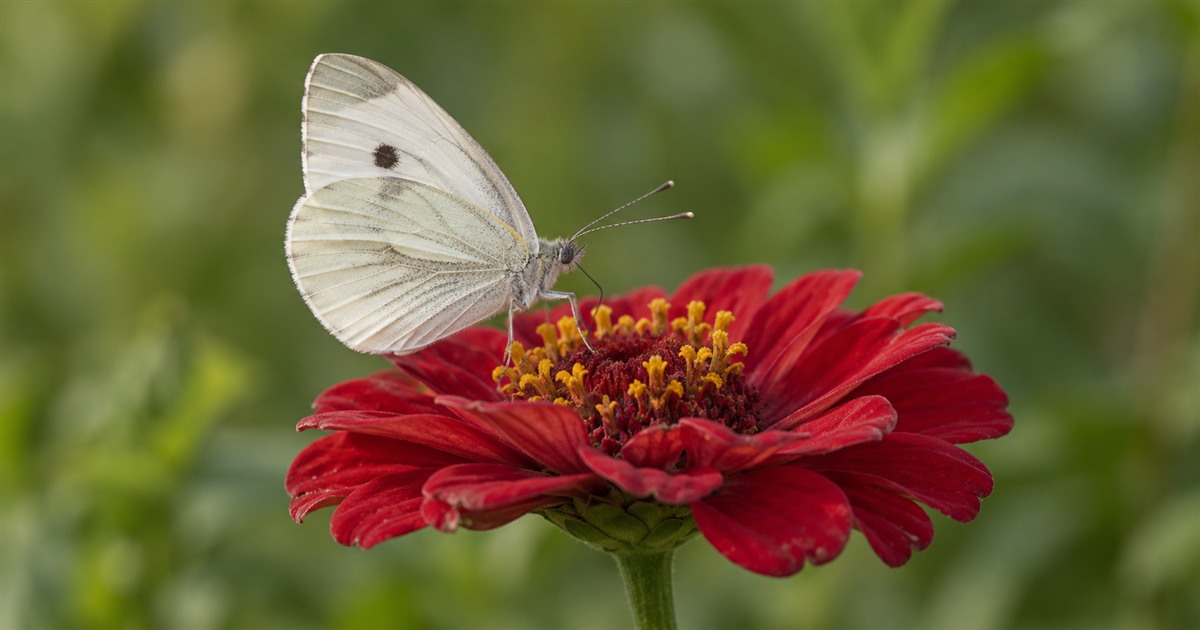
BUTTERFLY SYMBOLISM · REMEMBRANCE · PERSONAL CHANGE
A butterfly can capture your attention with a flash of color or an unexpected pause beside you. When it appears while you are remembering someone or thinking about a change, the moment may feel especially tender. You might experience it as beauty, coincidence, spiritual comfort—or more than one of those at once.
Some believers welcome butterflies as possible reminders of connection with a loved one who has died. Others find encouragement in the butterfly’s transformation. You can explore either meaning without deciding that the animal has delivered a confirmed message.
What a butterfly sighting might mean to you
The meaning begins with your own associations. Perhaps butterflies remind you of a family garden, a person’s favorite drawing or a season when life felt different. A memory can make an otherwise ordinary encounter deeply personal.
Consider three possibilities rather than a single required interpretation:
- Remembrance: “This brought someone I love to mind.” You can welcome the memory without claiming to know what caused the timing.
- Change: “This reminds me that I am becoming something new.” Let the image invite a question about your next step, not predict its outcome.
- Presence: “I noticed something beautiful today.” The experience does not have to contain a hidden message to matter.
Your understanding may come from a family story, a spiritual practice or personal experience. Other people may interpret the same sighting differently. There is no universal color code that can establish who sent a butterfly, what they want or what will happen next.
Why transformation is a meaningful association
The butterfly’s connection with change has a clear natural starting point. Butterflies develop through egg, caterpillar, pupa and adult stages. The Smithsonian National Museum of Natural History’s butterfly guide describes their metamorphosis and their relationships with plants.
You might use that change as a metaphor for a new role, a creative beginning or learning to live differently. But a human transition does not follow an insect’s timetable, and difficult experiences do not have to become positive lessons on demand. Growth can include uncertainty, practical help and rest.
Try asking, “What am I ready to make room for?” or “What would make this transition a little more supported?” An answer could be small: gather information, adjust a routine or talk to someone you trust. A butterfly does not require you to leave a job, end a relationship or make a financial commitment.
If the sighting reminds you of someone who has died
A butterfly appearing during remembrance can feel like a gentle hello. If that interpretation brings you comfort, you can hold it as a personal belief while acknowledging that the sighting cannot identify a spirit or verify a message. You do not have to defend the moment to someone who understands it differently.
You might quietly say the person’s name, recall a happy detail or share a story with someone who knew them. A photograph, a favorite recipe or a familiar place can also offer a way to remember. Our guide to seven experiences interpreted as loved-one signs explores that broader theme with room for uncertainty.
If you choose to ask for a sign in prayer or private reflection, leave the outcome open. Avoid setting a deadline or repeatedly checking the garden to decide whether you have been heard. A day without a sign is not rejection, punishment or evidence that a loved one has forgotten you.
Grief does not need a spiritual explanation or a timetable. The NHS guidance on bereavement and loss notes that people respond differently and suggests talking with trusted people or a healthcare professional or counselor. If coping is difficult, seek appropriate local support; spiritual comfort can accompany that help, not replace it.
A four-step reflection after a sighting
Keep the practice short so the experience remains an invitation rather than a puzzle you must solve.
- Notice the event. Describe what happened plainly: “A butterfly rested on a nearby flower.” Separate that observation from “It came specifically to find me.”
- Name the association. What person, feeling or change came to mind? You can write, “I felt reminded of my grandmother,” without turning it into a factual claim about contact.
- Include ordinary context. Were flowers nearby? Is this a place where you often see butterflies? Nature’s explanation and your personal meaning can coexist.
- Choose a kind response. Record a memory, send a thoughtful message or take one manageable step toward a change. You can also simply enjoy the moment and continue your day.
For example, imagine a butterfly appears while you are considering a painting class. You associate it with fresh beginnings. Rather than treating the encounter as an order to enroll, you could check the class’s cost, accessibility and schedule. The image opens a question; practical information helps you decide. This is an illustrative scenario, not a prediction.
If you enjoy exploring meaningful timing, our guide to signs and synchronicity offers a wider range of reflection prompts. If your interest is in choosing a personal animal symbol rather than interpreting one sighting, try the gentle animal-guide discovery exercise.
Appreciate the butterfly without asking it to perform
A butterfly is a living creature, not a messenger you need to keep nearby. Observe without catching it or trying to make it land on you. Let it leave when it leaves; that is not a spiritual goodbye you must decode.
Flowers and suitable habitat can draw butterflies to a place. The Smithsonian guide explains the importance of host plants for caterpillars and nectar plants for adults. If you want to support butterflies, learn which plants suit your area and the local species rather than choosing a planting solely for a symbolic meaning.
You can treasure the feeling of connection, stay curious about nature and leave the cause of the timing undecided. Sometimes the most meaningful response is simply to remember with love, move gently through change or notice the beauty that is already here.
The notion of asking for a sign and receiving a butterfly is an interesting perspective on coping mechanisms.
Connecting with animals as guides for the spirit realm offers a unique form of introspection.
Using animals as symbols to find traits we feel are lacking within ourselves is indeed a profound method of self-discovery.
While some may see these signs as spiritual, others might appreciate the metaphorical nature of the butterfly’s life cycle.
The symbolism of butterflies as messengers is a fascinating concept, particularly their association with transformation and change.
It’s interesting how different cultures have their own interpretations of natural phenomena as spiritual signs.
Do you think this need for meaning impacts our collective conscience and cultural development?
Indeed, it shows the universal human need to find meaning in the world around us.
The idea that butterflies can be seen as a safe way for spirits to reach out is comforting to many.
Yes, comfort in times of grief can be found in these symbolic interpretations.
How does this belief compare to other cultural beliefs about spirit messengers and signs?
The article presents an intriguing way to think about our interactions with the natural world and its potential spiritual significance.