

CRYSTALS · HOME · INTENTIONAL LIVING
A crystal on a shelf can be more than a pretty object. For someone who enjoys spiritual practice, it can mark a small promise: to pause before bringing work stress into the evening, speak kindly in a shared space or make time for quiet reflection.
Using crystals at home does not need to mean buying a large collection or following a complicated arrangement. Begin with one stone you enjoy, one place where it can sit safely and one intention you can put into practice. The most meaningful arrangement is one that fits the people who actually live there.
This guide keeps the focus on four familiar choices—black tourmaline, citrine, rose quartz and shungite—along with thoughtful placement, gentle rituals and care. Their spiritual meanings are personal associations, not guarantees of protection, wealth, better sleep or a changed relationship.
Begin with the atmosphere you want to create
Before choosing a stone, name what you want more of in the room. “Positive energy” can become something much clearer: a gentler arrival home, fewer work interruptions, a restful bedtime routine or warmer conversations at the table.
Ask yourself three questions:
- What happens here? An entryway, bedroom and work corner serve different purposes.
- What would support that purpose? A clear surface, comfortable lighting, privacy or an agreed quiet period may help.
- What can the crystal remind me to do? Choose an action rather than asking the stone to carry the entire responsibility.
For example, a stone near your keys might remind you to take a breath and put your phone away before greeting your family. Its meaning becomes part of a repeated moment of care. If you are easily overwhelmed by a busy household, our guide to coping as an empath offers complementary ideas for boundaries and recovery time.
Four stones for a personal home practice
You do not need all four. Select the association that feels useful now, and allow your own experience to shape the ritual. A stone’s mineral identity and its spiritual symbolism are different kinds of information; neither a higher price nor a dramatic sales claim makes your practice more sincere.
Black tourmaline: a reminder of grounding and boundaries
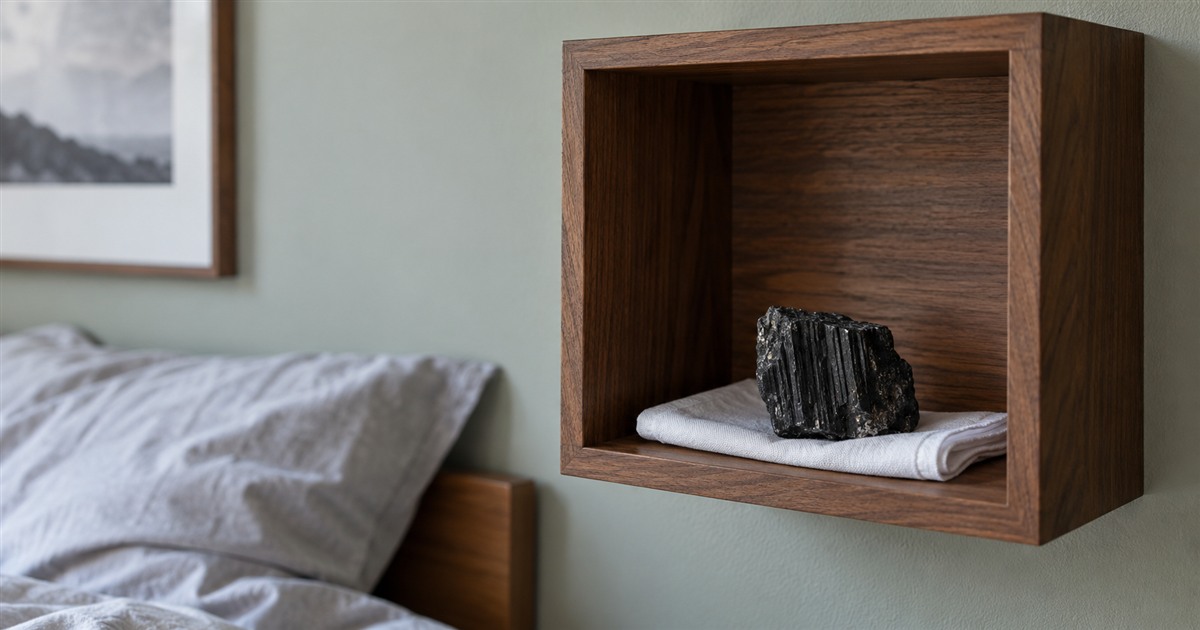
Black tourmaline is often chosen in modern crystal practice for grounding and symbolic protection. At home, that can become an invitation to decide what you welcome into your space and what needs a boundary.
Place a stable specimen on an entryway shelf or a tray in a quiet corner, away from small children, pets and places where it could fall. On arriving home, try the intention, “I can put down what belongs to the working day.” Then follow it with something concrete: close the work app, change into comfortable clothes or take a few undistracted minutes.
A four-corner arrangement can also be a meaningful symbolic grid if you enjoy that practice. Keep the stones on secure surfaces rather than in walkways. You do not need to bury them, place them outside or fear that missing a corner leaves your home spiritually exposed.
Citrine: an invitation to purposeful effort
Citrine’s warm yellow-to-orange appearance makes it a lovely focus for optimism and abundance intentions. Some crystal users call it a merchant’s stone. Treat that association as encouragement to use your resources thoughtfully, not as a promise of money or business success.
A work shelf or a tidy planning corner can be a sensible place for it. Instead of relying on a compulsory compass direction, choose a location that suits your space and keeps the stone out of prolonged intense sunlight. You can honor a placement tradition you enjoy without treating it as a requirement for everyone.
Pair the intention “I welcome useful opportunities” with one achievable step: send the application, organize an invoice, review a budget or set aside time for a creative project. Let abundance include enough rest and enough time, not only more possessions.
Rose quartz: a cue for kindness and connection
Rose quartz is a favorite for heart-centered intentions, compassion and affection. A bedroom shelf, personal reading corner or shared living area can hold that meaning without asking the stone to control someone else’s feelings.
Try a simple evening question: “What would kindness look like here tomorrow?” Your answer might be a gentler way of speaking to yourself, a sincere apology or asking a housemate what would make the week easier. In a shared room, invite agreement rather than announcing what the crystal will do for everyone.
If you enjoy heart-chakra reflection, explore our guide to heart chakra crystals for a gentle practice. The stone can accompany your intention; it does not guarantee reconciliation, affection, pleasant dreams or uninterrupted sleep.
Shungite: a symbol for a more deliberate work corner
Shungite is a dark, carbon-rich material sold for decorative and spiritual use. If its appearance appeals to you, a piece on a separate desk tray can represent a clearer relationship with technology: fewer unnecessary notifications, regular breaks and a chosen end to the working day.
Keep it away from device vents, ports and anything it might scratch or mark. There is no reason to put it on a router or attach it to a phone. A decorative stone should not be relied on as an EMF shield.
The FTC’s advice on cell-phone radiation products cautions against unsupported shielding claims. That warning is about marketed phone shields, not a test of your individual specimen; the useful distinction is between enjoying a spiritual symbol and buying a promised technical protection.
Choose a safe place before choosing a layout
Let the room guide the arrangement. A single stable tray is often easier to live with than scattered stones on every surface.
- Entryway: choose a secure shelf that does not interfere with keys, shoes or opening doors.
- Bedroom: use a bedside tray or shelf rather than putting stones under a pillow or loose in bedding.
- Work corner: keep crystals separate from electronics, drinks and papers you need to move frequently.
- Shared room: ask the other people who use it whether they welcome the display. Different beliefs can coexist respectfully.
- Reflection space: leave enough room for a notebook, a comfortable seat and the practice itself.
Small stones are not suitable loose objects around babies or young children. Poison Control identifies small rocks among objects that can become choking hazards. Keep small pieces and sharp or fragile specimens out of children’s and pets’ reach, and seek appropriate urgent help if something is swallowed.
Crystals are decorative objects, not a replacement for locks, smoke alarms, electrical repairs or support when a home is unsafe. A symbolic protection practice can sit alongside real-world care without taking its place.
A five-step home intention ritual
Set aside a few quiet minutes. You can hold a smooth, safely handled stone or leave it on its tray. No elaborate equipment is needed.
- Clear a small area. Remove clutter and choose a place where the stone will not be knocked over.
- Notice the stone. Observe its color, weight or texture without needing a special sensation to prove that you have connected.
- Name one intention. Use a sentence within your own influence: “I make room for rest,” or “I speak with more patience.”
- Choose a matching action. Set a work finish time, prepare tomorrow’s essentials or arrange a calm conversation.
- Return and reflect. After a few days, ask what was helpful and what needs adjusting. You can change the location or intention.
If you use tarot, a pendulum or other spiritual tools, keep the crystal as a companion to reflection rather than proof that an answer must be correct. Our guide to tools of divination can help you choose a practice that feels comfortable.
Separate physical cleaning from spiritual cleansing
Cleaning removes ordinary dust or residue. Spiritual cleansing is a ritual some people use to mark a fresh intention. A stone does not need to be dirty, dangerous or full of someone else’s negativity for you to enjoy a symbolic reset.
For an unknown specimen, start with a soft dry cloth and ask a knowledgeable seller about its identity, coatings, treatments and care. Do not assume that every stone can be soaked, scrubbed, salted or heated.
GIA provides mineral-specific guidance: tourmaline and rose quartz can generally be cleaned with warm soapy water, while ultrasonic and steam cleaning are not recommended for them. Its citrine care guide also recommends warm soapy water and warns that intense light can fade some citrine and abrupt temperature changes can fracture it. Mounted pieces, mixed specimens, coatings and repairs may need different care.
For a gentle spiritual reset, leave the stone indoors on a secure surface and quietly restate your intention. You might use a brief visualization or a soft sound if others in the home are comfortable with it. Moonlight is optional; an indoor location avoids dew, rain and temperature changes. There is no need to burn smoke or leave stones in harsh sun.
“Self-cleansing” is a spiritual description, not a substitute for removing dust. Keep crystals out of drinking water and food; a decorative specimen is not certified for that purpose. Do not grind stones or use their dust in homemade products.
Buy thoughtfully and let your collection stay small
It is reasonable to be drawn to a color or shape. Combine that intuitive preference with a few clear purchasing questions:
- What is the mineral or material, and is the label a trade name?
- Has it been dyed, heated, coated, glued or made in a laboratory?
- What care does this particular piece need?
- What can the seller actually tell me about its origin and sourcing?
- What is the total price, and is it comfortable for my budget?
Treatment does not automatically make a stone undesirable; undisclosed treatment or a misleading description is the concern. A seller saying “ethical” should be willing to explain what that means and what they know, rather than offering only a reassuring word. If you cannot verify a claim, you can choose not to pay extra for it.
Listen to what attracts you without feeling pressured by promises of guaranteed wealth, protection or healing. Our guide to listening to intuition offers a useful balance of inner noticing and practical questions.
A small collection can hold a great deal of meaning. Choose one welcoming place, care for the stone and let its presence remind you of the home you are creating through your everyday choices.
The process of how crystals form under pressure and heat over millions of years is quite remarkable and adds to their mystique.
Indeed, the geological formation of crystals is a complex and interesting process that contributes to their unique properties.
While the spiritual benefits of crystals are debatable, their aesthetic value in home decor cannot be denied. They undoubtedly add beauty to a space.
The historical use of crystals for peace and protection is fascinating. It’s intriguing how specific stones are believed to influence our environment.
I think the suggestion to use Black Tourmaline to protect against EMF is interesting. Has anyone tried this and noticed a difference?
Personally, after placing Black Tourmaline near my devices, I felt a reduction in overall electronic interference, but it might be subjective.
Selecting crystals based on personal intuition seems like a practical approach. It ensures a personal connection and perceived effectiveness.
I appreciate the detailed explanation of different crystals and their benefits. However, I wonder if scientific studies support these claims.
While scientific evidence might be limited, many cultures have traditionally used crystals, which suggests there could be subjective benefits.
The process of cleansing crystals seems important to their effectiveness. Are there crystals that shouldn’t be cleansed in certain ways?
Yes, some crystals like Selenite can dissolve in water, so researching the appropriate methods for each type is crucial.
Additionally, some crystals might fade in sunlight. It’s essential to know the properties of your crystals before cleansing them.
The idea of using crystals to enhance positive energy in a home is appealing, especially considering the detailed placement suggestions provided.