

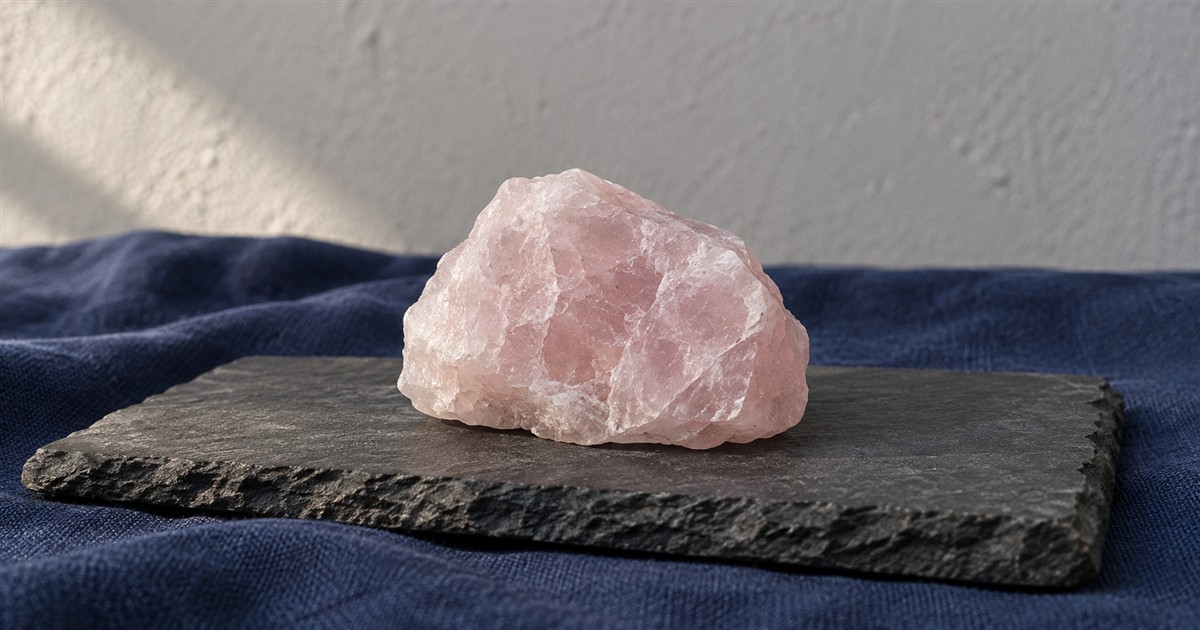
Heart-centered reflection, crystals and compassion
A smooth pink stone in your palm, a quiet moment and an intention to treat yourself with kindness can become a meaningful spiritual ritual. If you are drawn to heart-chakra crystals, you may be looking for more compassion, a gentler relationship with yourself or space to process hurt feelings.
Crystals can be personal companions to meditation, prayer and journaling. In this guide, “heart healing” means spiritual reflection and emotional care—not treatment of the physical heart or another medical condition. You can enjoy a stone’s beauty and the meaning you give it without needing to believe it will repair a gland, clear trauma or guarantee a relationship change.
Understanding the heart chakra without confusing the terms
The heart chakra is commonly called anahata in yogic teachings. The Himalayan Institute’s heart-centered teaching discusses it within a spiritual framework of connectedness. Chakra traditions are not identical, and contemporary crystal practices add their own interpretations.
Some modern practitioners also describe a “higher heart” or “thymic” center around the upper chest. That spiritual term should not be confused with a medical description of the thymus gland. A “soul star” center, when used in expanded contemporary chakra systems, is another concept rather than a different name for the ordinary heart chakra.
For an introduction to how a practitioner may approach these ideas, see our guide to chakra and aura readings. Ask the reader which framework they use instead of assuming every system has the same locations, colors or meanings.
Colors and meanings: choose what speaks to you
Green and pink often appear in contemporary heart-centered crystal practices; aqua and turquoise shades are also used in some higher-heart interpretations. You might connect green with renewal, pink with tenderness or blue-green with calm expression. These are symbolic associations, not rules about what your body needs.
It is fine to work with a different color, a photograph of a stone or a keepsake that brings you comfort. A color you dislike is not automatically the one you must use, and feeling sad does not mean your heart center is defective or blocked.
Choose an intention before choosing an object. “I want to speak more kindly to myself” is more useful than buying several stones and hoping they will decide what needs to change.
Nine crystals to explore with a personal reflection prompt
The following themes are optional ways to structure your practice, not mineral properties or guaranteed effects. Several are common in modern crystal symbolism; the prompts give you something concrete to explore. Pick one rather than treating the list as a shopping checklist.
| Stone | Optional focus | Journal prompt | Practical note |
|---|---|---|---|
| Rose quartz | Gentleness toward yourself | What would I say to myself if I were speaking to a dear friend? | A smooth stone can serve as a tactile reminder; no rare specimen is needed. |
| Rhodonite | Compassion with boundaries | Where can I be caring without taking on everything? | Choose a comfortable, sound piece rather than a sharp fragment. |
| Pink or watermelon tourmaline | Giving and receiving | What support would I like to accept instead of always providing it? | Color and price do not measure spiritual worth. |
| Chrysoprase | Fresh beginnings | What small choice would help me begin again kindly? | Check the seller’s identification and care information. |
| Larimar | Unhurried expression | What feeling could I name without rushing to fix it? | A quiet place and an honest sentence matter more than a special tool. |
| Kyanite | A fresh start for your practice | What would help me feel ready to reflect today? | Leave fragile or rough specimens on a tray rather than pressing them to skin. |
| Dioptase | Forgiveness at your own pace | What might letting go mean without excusing what happened? | A display specimen can be a visual focus; forgiveness is not compulsory. |
| Tugtupite | Tenderness during grief | What kind of care would feel welcome today? | It is not necessary to buy an uncommon stone to honor a loss. |
| Grandidierite | A different perspective | What possibility have I not yet considered? | A collector’s gemstone is optional, not a stronger route to healing. |
Kyanite and the idea of a fresh start
If you like to begin a ritual with “clearing,” place your kyanite on a tray and take a moment to tidy the space or set aside distractions. You can interpret that as an energetic fresh start within your beliefs. You do not need to establish that invisible negativity has been removed before you are allowed to meditate, and the stone cannot erase trauma.
Dioptase and forgiveness
You may use dioptase as a reminder to explore an old hurt, but do so gently. Forgiveness does not require reconciling, excusing harm or giving someone access to your life. A more comfortable intention may be, “I want less of my attention to be consumed by this today.”
If the situation involves a relationship, our article on being unhappily in love can help you reflect on your needs and choices. A spiritual practice should leave room for boundaries, not persuade you to tolerate mistreatment.
Tugtupite and tenderness
Tugtupite can be a personally meaningful focus for grief or remembrance. It is not only pink: the Mindat mineral record lists red and several other colors as well. Its appearance does not determine whether you are grieving “correctly.”
You can honor someone with a stone, a photograph, a favorite song or an ordinary object associated with them. You do not need to force difficult emotions to surface or prove that you have moved on.
Grandidierite: a mineral correction
Grandidierite is blue-green to green-blue, not a pink crystal. GIA’s mineral research describes that color range. If you enjoy it as a spiritual symbol of a fresh perspective, that meaning is yours to explore; its rarity does not give it greater medical or spiritual authority.
A six-step heart-centered crystal practice
- Choose a comfortable setting. Sit somewhere supported. Keep your eyes open if that feels better; you do not need a special posture.
- Place the object safely. Hold a smooth, sound stone lightly or leave it beside you on a cloth. There is no need to press a heavy crystal against your chest.
- Name one intention. Try “I can be compassionate and keep my boundaries” or “I am willing to receive care.” Choose language you actually believe.
- Notice without forcing. Observe the color, weight or texture. Breathe normally and allow whatever feelings are present. No tingling or unusual sensation is required.
- Write one honest sentence. Finish “What my heart needs today is…” You can keep the answer private and unfinished if that is all you have.
- Choose one ordinary action. Ask for help, take a break, express appreciation or make a clear request. Put the stone away and return to your day.
If focusing on your chest or emotions feels uncomfortable, stop and shift attention to the room around you. You can use a short practice or skip it altogether. Spiritual reflection is not a test of endurance.
For a broader routine that combines reflection with everyday care, explore our spiritual self-care ideas.
How to care for your stones and your space
- Separate spiritual cleansing from physical cleaning. An intention, gentle sound or placing a stone on a clean cloth can mark a ritual without exposing it to salt, water or heat.
- Check the specific material. Stones, coatings, treatments and jewelry settings need different care. Do not assume a method suitable for one crystal is safe for all.
- Keep stones out of drinking water. Do not swallow crystals, grind them into powders or use mineral-infused water as a remedy. A nearby stone can provide symbolism without touching food or drinks.
- Avoid rough handling. Sharp edges, fragile specimens and small loose pieces are better displayed safely; keep small stones away from children and pets.
- Choose a smoke-free ritual when helpful. You do not need incense, a candle or smoke to give your practice meaning.
For plain rose quartz, GIA recommends warm soapy water and avoiding ultrasonic and steam cleaning. Follow material-specific advice, particularly for mounted, treated or unidentified pieces, rather than applying that recommendation to your whole collection.
Buying thoughtfully, without pressure
Before buying, ask for the material’s name, any known treatments, care instructions and a clear price. Some crystal-market labels are trade names or describe mixtures rather than one mineral species. A romantic name is not evidence of a unique healing power.
Set a budget that feels comfortable. Rose quartz or a stone you already enjoy can support the same reflection exercise as a costly collector’s piece. Be cautious of anyone who says you must buy a particular crystal to prevent harm, repair a relationship or prove your spiritual commitment.
If you prefer to include tarot, choose a question such as “What would help me practice compassion with a clear boundary?” Our tarot question guide offers more ways to focus on your choices rather than demand a guaranteed outcome.
Spiritual meaning and health care can stay distinct
A comforting ritual can be meaningful without making a crystal a treatment. In a 2025 randomized study, rose quartz did not reduce anxiety more than a visually matched placebo. That finding does not decide your personal spiritual beliefs, but it does not support presenting the stone as an anxiety treatment.
Crystals should not be used to treat influenza, thyroid problems, immune-system conditions or heart disease, or to replace trauma care. Physical symptoms and persistent distress deserve appropriate professional support. Do not stop medication or delay an assessment because a crystal reading describes a blocked chakra.
Let the intention become part of daily life
The most useful part of a heart-centered ritual may be what you carry into the next conversation or ordinary moment. Notice whether your intention helped you speak more honestly, accept care or treat yourself more gently. If it did not feel helpful, change it without blaming yourself or buying another stone.
A crystal can be a beautiful reminder. Let your practice make room for kindness and discernment together, with your well-being and choices at its center.
I wish the article provided more empirical evidence to support the efficacy of these crystals.
The concept of higher heart chakra and its importance in emotional balance is new to me. I’ll look into it further.
I appreciate the detailed explanation on chakra crystals, especially the emphasis on different colors and their effects.
Yes, the color associations add a layer of depth to the understanding of how these stones work.
The use of crystals for emotional and physical healing is an intriguing concept. I am curious about the scientific backing for these claims.
It’s well documented in holistic practices, but mainstream scientific consensus remains elusive.
The connection between the heart chakra and thymus gland is quite fascinating. It makes sense that these areas are interconnected.
As far as I know, traditional medicine does not recognize chakras, but it respects the immune function of the thymus.
I wonder if modern medicine acknowledges this connection in any form?
It’s interesting to note the variety of stones mentioned and their specific uses for emotions like compassion and forgiveness.
I find the holistic approach to healing through crystals interesting, particularly the idea that they can affect physical health like the immune system.
Holistic methods often provide complementary benefits, even if they’re not fully scientifically validated.
While holistic methods can be beneficial, it’s crucial to also rely on scientifically proven treatments.
The idea that different colored Kyanite can clear energy blockages and past traumas is intriguing but requires more scientific validation.