

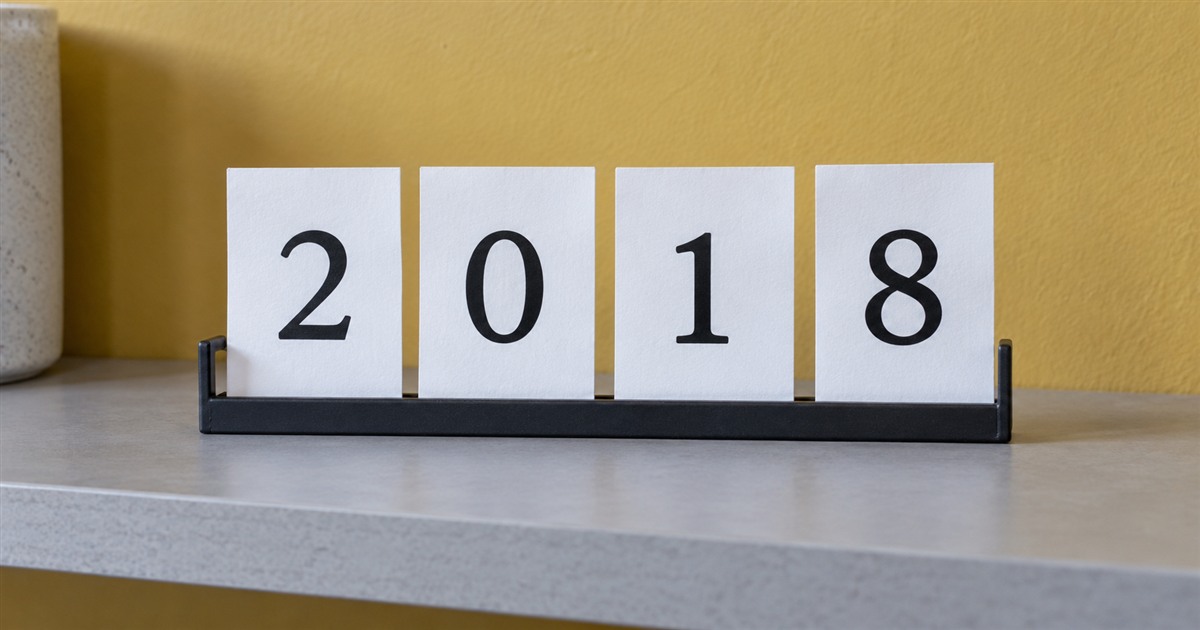
Historical numerology · 2018 · Reflection and choice
What did numerology say about 2018? Its calendar digits add to 11, then reduce to 2: 2 + 0 + 1 + 8 = 11; 1 + 1 = 2. That is why you may see the year described as an 11/2 Universal Year.
This is a historical guide to the 2018 theme, not a forecast for the present year. If you enjoy numerology, you can use its language of sensitivity, partnership and balance to look back thoughtfully. Your memories, circumstances and choices still matter more than making every event fit a number.
The helpful starting point is to separate three things: the calendar-year calculation, your personal-year calculation and the meaning you choose to explore. A birth-year sum alone is not your Personal Year.
Why 2018 was called an 11/2 year
A Universal Year uses the digits of the calendar year. The arithmetic for 2018 produces 11, and reducing those digits produces 2. Writing 11/2 keeps both values visible rather than suggesting that 11 and 2 are unrelated forecasts.
In some numerology approaches, 11 is called a master number and receives an additional symbolic interpretation. Felicia Bender’s 2018 explanation on AstroStyle uses the 11/2 Universal Year notation. That identifies a practitioner convention; it does not mean everyone experienced doubled emotions, stronger powers or guaranteed clarity.
The previous calendar year reduces differently: 2 + 0 + 1 + 7 = 10; 1 + 0 = 1. You can use that contrast as a reflective story about beginning something and then learning to cooperate. It should not erase experiences that do not match the story.
Sensitivity, illumination, partnership and balance
The original themes of this article are worth exploring gently. “Sensitivity and illumination” can become an invitation to notice what you felt, what you understood and what still needed a conversation. A feeling may be meaningful without being complete information about another person.
“Partnership and balance” can invite you to consider romantic, family, friendship and working relationships. Where was there mutual effort? Where did patience help? Where did you need a clearer boundary or a more direct request?
Balance is not the same as keeping everyone pleased. Cooperation can include saying no, changing an arrangement or asking for support. Numerology should not be used to tell someone to remain in a harmful situation because a year supposedly requires peace.
For the original theme of “mysteries and ideas,” try a practical distinction: an unanswered question may need more information; an idea may need time and work. Neither is guaranteed to resolve because a calendar number says it is ready. Our guide to listening to your intuition offers a complementary way to hold inner noticing alongside practical questions.
Your calculation: personal year is not birth year
The earlier version of this article reduced only the year of birth—for example, 1 + 9 + 7 + 0 = 17; 1 + 7 = 8 for 1970—and called that the basis of a personal-year reading. The addition is correct, but the label mixes different calculations. It leaves out your birth month and day and does not change with the year being explored.
For the single-digit Personal Year method here, use your birth month, birth day and the calendar year you want to explore. Add their digits and reduce the total to one digit. Numerology.com’s personal-year walkthrough describes this method using the birthday in the chosen calendar year, rather than the original birth year.
Here is an original worked example for someone born on July 14, looking back at 2018:
- Month: July is 7.
- Day: 14 contributes 1 + 4.
- Chosen year: 2018 contributes 2 + 0 + 1 + 8.
- Add: 7 + 1 + 4 + 2 + 0 + 1 + 8 = 23.
- Reduce: 2 + 3 = 5. The Personal Year result is 5 under this method.
Numerologists may differ in how they retain master numbers or describe cycle timing. This walkthrough reduces the final Personal Year to a single digit and names the calendar year explicitly. If a reader uses another convention, ask them to show their steps before comparing results.
A Life Path or pinnacle calculation is also separate. Our guide to understanding your pinnacle number explains longer birth-date-based cycles; do not substitute those results for a Personal Year.
Nine number themes as optional reflection prompts
The following keeps the original article’s nine themes—initiative, emotional awareness, creativity, projects, adaptability, home, reflection, cooperation and discernment—but removes its promises about what 2018 would bring. These are original journaling prompts, not a validated prediction system or a requirement to recognize yourself in every description.
1. Initiative without rushing
Where did you want to begin something, and what helped you act at a manageable pace? Independence can include asking for help. Choose one moment when a clear first step was more useful than trying to do everything at once.
2. Emotional awareness and respectful connection
What did you learn about expressing a need or listening to someone else’s? You do not have to suppress feelings to be cooperative. Notice whether the relationship made room for both people’s perspectives and limits.
3. Creativity and expression
What did you enjoy making, sharing or saying? Creativity need not have become a career or a finished project to matter. Remember a small expression that felt honest, even if it never received public attention.
4. Projects and practical structure
What supported steady progress, and what genuinely got in the way? A lack of time, money, access or support is not simply a lack of patience. Name one realistic adjustment rather than blaming yourself for an unfinished project.
5. Adaptability without assuming delays
Where did a change ask you to revise a plan? You need not expect disruption because of a number. Consider a time when flexibility helped, and a time when a firm boundary was more helpful than adapting further.
6. Home and shared care
What made everyday life feel more supportive? Balance at home often involves clear agreements and shared effort, not one person absorbing every difficulty. What responsibility could have been discussed more openly?
7. Reflection with room for uncertainty
What question deserved more thought? You can reflect without turning every relationship into a puzzle. Include what you could not know, and allow a memory to remain complicated rather than forcing a tidy spiritual lesson.
8. Cooperation and resources
Where did working together help, and what terms needed clarification? A promising partnership still deserves practical questions about expectations, costs and responsibilities. A number is not a reason to assume a business opportunity is safe or profitable.
9. Discernment with kindness
Which connections felt mutual, and which needed a different boundary? You do not need to end a friendship because a theme mentions release. Look at actual behavior, your capacity and what is safe—not a prediction that you will receive all the answers.
Look back without forcing the pattern
Choose one theme that feels useful and one actual event you remember. Write three short notes: what happened, what you felt at the time and what you understand differently now. Include details that do not fit the theme as well as those that do.
For example, someone exploring cooperation might remember a shared project that went well and another that did not. Their useful conclusion could be, “Clear roles helped us,” rather than, “2018 guaranteed harmony.” The practice can lead to a question for today: what agreement would make the next project easier?
If you would like to turn that reflection into a fresh beginning, our simple intention-altar guide offers a gentle reminder-and-action practice. No special object or paid reading is necessary to do this exercise.
Keep numerology as a meaningful companion if you enjoy it, not a deadline or a verdict. You were not less spiritual if 2018 was difficult, and a mismatch with a reading does not mean you missed your chance. A thoughtful question can remain useful long after the year has passed.
The breakdown of how to calculate the birth number is clear and straightforward. It adds an interesting dimension to understanding personal traits.
It’s intriguing to see how numerology assigns different expectations for each birth number in 2018. The emphasis on partnerships and balance resonates.
Yes, the detailed predictions for each birth number provide a personalized touch. It’s insightful.
I agree, especially the point about the 2 year being a gentler year aimed at consolidation.
The article’s emphasis on patience and balance in a 2 year aligns well with common philosophical teachings. It’s a helpful reminder.
While I’m generally skeptical about numerology, the structured approach to interpreting 2018’s vibrations provides an engaging narrative.
Numerology’s insights for different birth numbers in 2018 seem to offer a roadmap for personal and professional growth. It’s worth further exploration.
This explanation of the energies associated with birth numbers in 2018 offers a fresh perspective on self-reflection and goal-setting.
Indeed, it’s a unique way to think about personal development and how external energies can influence it.
The concept of master numbers having more potential is intriguing. It would be interesting to see empirical studies on its real-world applications.
The explanation of master numbers and their significance in numerology is quite fascinating. I wonder how this knowledge could influence decision-making processes.