

New beginnings · Sacred space · Everyday intention
It is very easy to get caught up in the New Year promise of a new you. Yet enthusiasm and exhaustion can arrive in waves, and a goal that felt clear during the celebrations may become harder to hold onto when ordinary life returns. A small altar can offer a welcoming place to reconnect with what matters.
You do not need to become a different person to deserve a hopeful beginning. Think of your altar as a place for attention, prayer or personal meaning—not a test of whether you are positive enough. It can support an intention without promising luck, money, romance or a particular result.
The three steps below remain simple: select a space, choose your intention and objects, then make a practice you can actually return to. You can begin in January or on any ordinary day when you would like a fresh start.
1. Select a space that fits your real home
It is important to be intentional while choosing the space for your altar. Focus on where you feel most relaxed and at peace: perhaps where you read, reflect or practice gentle movement. A whole room is unnecessary. A stable shelf, a small tray or a clear corner can be enough.
A workspace is not automatically the wrong place. If a quiet desk corner helps you remember to pause, it may suit you well. If work already feels overwhelming there, choose somewhere else. Let your actual experience guide the choice rather than searching for a location that is perfectly free of difficult feelings.
Before arranging anything, check the practical details:
- Stability: use a surface that will not tip, and keep objects away from an edge.
- Access: leave doors, walkways and essential household surfaces clear.
- Shared space: ask the people who live with you whether they welcome the display, sound or scent.
- Children and pets: keep small, sharp, fragile objects and batteries out of reach.
- Comfort: choose a position you can use without having to kneel, sit on the floor or hold an uncomfortable posture.
Begin by removing dust and unnecessary clutter. If you enjoy symbolic cleansing, quietly name what you would like the space to represent. A gentle sound, a fresh cloth or an open-eyed moment of reflection can mark that beginning. Burning sage or incense is not a requirement, and smoke is not proof that a space has become sacred. Our guide to cleansing the energy in your home offers more ways to create a meaningful reset.
2. Select your intention and sacred objects
Consider your goal for the New Year. Is it more gratitude, joy, financial steadiness, love or time for something you value? Then make the wish a little more specific. “More peace” might mean a clearer finish to the working day. “More love” might mean tending a friendship or speaking more kindly to yourself.
Choose an intention that respects what is within your influence. You can invite connection without trying to control another person’s feelings. You can welcome opportunity without assuming that a display will produce money. An altar can remind you of a direction; it cannot make every circumstance cooperate.
Gemstones, a photograph, a bell, a personally meaningful book or a simple handmade object may represent your strengths and spirit. You do not need all of them. One object and one short intention can feel more personal than a crowded collection bought because someone said it was necessary.
If you use devotional objects from a living religious tradition, follow the guidance of that tradition rather than treating every sacred figure as an interchangeable good-luck symbol. A personal nonreligious intention corner is also a valid choice. Leave out anything you do not understand, do not believe in or do not feel comfortable using.
Try choosing an object for the action it will remind you to take:
- A stone: a cue to pause and choose a manageable next step.
- A photograph: a reminder to care for a relationship through an appropriate message or shared time.
- A blank card: a place to write one intention and revise it as life changes.
- A small bowl: somewhere to keep a folded note of gratitude, without needing a purchased ritual kit.
If crystals appeal to you, our guide to using crystals at home explains symbolic placement and practical care. An ordinary object you already own can be just as meaningful. Keep your spending comfortable; a higher price does not give an intention greater spiritual worth.
3. Set up a gentle practice
Once your space and objects are in place, it is time to use your altar. It may be aesthetically pleasing, but its purpose is the moment you spend there. Choose a short practice that fits your day instead of making an elaborate commitment you will dread keeping.
You might pray, ring a bell softly if others agree, read a meaningful passage or simply notice the object before you. A flameless light can create a warm atmosphere without an open flame. The U.S. Fire Administration’s candle-safety guidance recommends considering battery-operated flameless candles. If you do use a real candle, follow its safety advice: keep it at least 12 inches from anything that burns and put it out when leaving the room or going to bed. A shelf surrounded by fabric, cards or curtains is not a place for a flame.
Here is a simple flame-free practice to adapt:
- Arrive. Sit or stand comfortably and notice the space. Keep your eyes open if that feels better.
- Name the intention. Say a brief sentence such as, “I make room for what matters today.”
- Choose one action. Decide what that intention looks like in ordinary life.
- Close gently. Put the note back, switch off the light if used and return to your day.
There is no required feeling, vision or energetic sensation. If quiet reflection makes you distressed, stop and choose another activity. NCCIH’s guidance on meditation and mindfulness notes that unwanted experiences can occur and cautions against replacing or postponing conventional care. Your spiritual practice should not become a reason to ignore support you need.
Turn a hopeful intention into a real next step
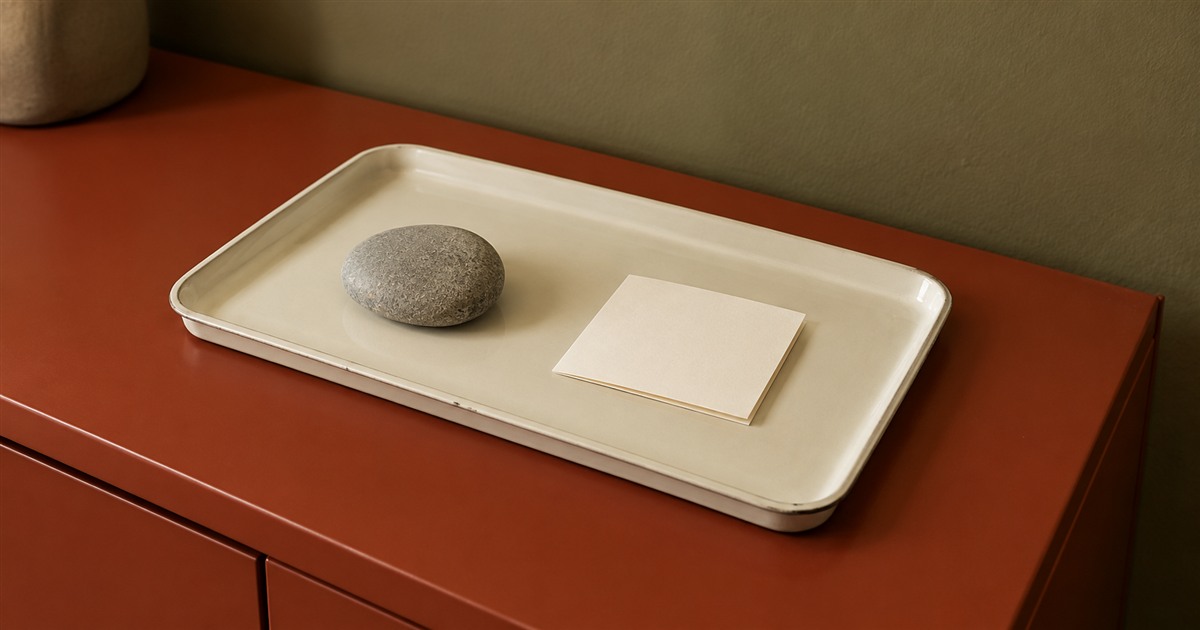
Imagine that your intention is “I want more room for creativity.” A smooth stone and a folded card sit on your tray. During your pause, you choose to spend ten minutes sketching after lunch—not to complete a masterpiece or prove you have attracted inspiration.
This is an illustrative example, not a promise that a ritual will change your circumstances. If lunch is too busy, you can choose a different time or a smaller action. The practice remains yours. Our guide to goals and the law of attraction offers a complementary way to connect hope with choices and effort.
Let your altar change with you
After the glitter and excitement fade, the intention you set can remain. It can also evolve. A goal chosen at New Year may no longer fit your health, schedule, responsibilities or interests. Changing it is not a failure of faith.
Return when you can. If you miss a day or a month, begin with the space you have now: remove dust, put away what no longer feels meaningful and choose one honest intention. You do not need to buy a stronger object, repeat a cleansing out of fear or make up for missed visits.
A useful question is, “Does this practice help me live the intention, or has it become another obligation?” Keep what feels supportive. Simplify what feels demanding. Your altar can be a small, welcoming reminder that hope and practical care belong together.
The connection between the physical space of the altar and the energy one wishes to cultivate is fascinating. I’d like to explore this further.
It’s important to note the emphasis on using the altar daily. Consistency seems to be a key element in maintaining focus on New Year goals.
While the concept of an altar is typically seen in religious contexts, adapting it for personal development is an interesting and potentially effective idea.
The idea of creating an altar at home is quite intriguing. It makes sense to have a dedicated space for reflection and goal-setting.
Setting up an altar in a place of peace and relaxation makes sense. Avoiding areas associated with stress is a good strategy.
I’m interested in how different objects can represent one’s highest self. This could be a very personalized and meaningful ritual.
Indeed, the selection of sacred objects based on intuition can make the altar more powerful and aligned with personal goals.
I appreciate the reminder to let the altar reflect the commitment made to oneself. This can serve as a constant source of motivation.
The practice of cleansing the chosen space with sage or incense adds an extra layer of mindfulness to the process. It’s a thoughtful touch.