

Spirit communication · Reflective practice
Ouija boards, scrying and séances invite different kinds of spiritual curiosity. One uses letters and a moving pointer, another begins with a reflective surface, and the third brings people together in the hope of receiving messages through mediumship. Understanding those differences helps you choose a practice that fits your beliefs and feels comfortable.
If you believe in spirit communication, you can approach these traditions with warmth and respect while leaving room for uncertainty. There is no need to force a message, frighten yourself or treat every impression as an instruction. A meaningful practice can be quiet, thoughtful and entirely optional.
Ouija, scrying and séances: what is the difference?
| Practice | Main focus | A thoughtful starting point |
|---|---|---|
| Ouija or talking board | A planchette moves over letters, numbers or words. | Understand how movement can arise and agree on boundaries. |
| Scrying | Quiet attention to water, a mirror or a crystal, followed by reflection on impressions. | Try a short, comfortable water-gazing exercise. |
| Séance | A gathering centered on attempted spirit communication, often with a medium. | Choose a respectful facilitator and protect everyone’s privacy. |
These practices are related by their spiritual associations, but they are not interchangeable. You do not need a talking board to hold a séance, and scrying does not have to involve seeking contact with someone who has died. It can be a personal divination or reflection practice.
What is a séance?
A séance is a gathering intended to seek communication with spirits. Some are led by a medium who describes impressions or messages; others are informal spiritual circles. The format varies, so ask how a session will work rather than assuming it resembles a dramatic scene from a film.
People may attend because they hope for comfort, connection or a sense of remembrance. Those hopes deserve care. A medium cannot promise that a particular loved one will come through, and nobody should be pressured to accept a message that does not feel relevant.
If you are choosing between reading styles, our guide to psychics and mediums explains their different focuses. It can help you decide whether you want a mediumship session or another kind of spiritual conversation.
Five ways to approach a séance respectfully
- Agree on the purpose. Ask whether the gathering is for mediumship, remembrance or learning. Do not surprise someone with a contact attempt involving their bereavement.
- Make participation optional. Everyone should be free to listen, decline a question or leave. Nobody needs to enter a trance or hold hands to show sincerity.
- Ask about the format and any cost. Clarify the length, group size, recording rules and fee before attending. Avoid anyone promising guaranteed contact.
- Use clear, gentle communication. You can say, “That does not connect with me,” or “I would prefer not to discuss that.” Do not invent a match to make a message fit.
- Close with care. Leave time to reflect and check in with one another. A simple thank-you and an ordinary conversation can be a meaningful ending.
Respect includes avoiding pranks, planted sounds or attempts to frighten participants. If someone shares an impression, record it in their words rather than embellishing it as the group talks. Ask permission before discussing another person’s experience outside the circle.
A remembrance altar: connection without pressure
You can make an altar as simple or elaborate as you want. A photograph, a keepsake, fresh flowers or an object that reminds you of a loved one can create a personal place for remembrance. Choose items that feel meaningful rather than following a list of supposed requirements.
You might sit there and speak a few words, write a letter or recall a favorite story. If offerings are part of your own tradition, follow that tradition thoughtfully. Flowers or a battery candle are easy alternatives when smoke, open flames or food are unsuitable for your home.
The altar does not need to “earn” a spirit’s trust, and you do not have to receive a sign for the remembrance to matter. Our guide to preparing for a medium reading offers another way to think about your hopes and boundaries if you later choose a session.
What is an Ouija board?
An Ouija board is a type of talking board marked with letters, numbers and words such as “yes” and “no.” Participants place their fingertips lightly on a movable pointer called a planchette, which indicates responses as it moves.
Talking boards are much older than the 1980s. The SFO Museum’s talking-board exhibition includes a Kennard Novelty Company Ouija board dated 1891, alongside earlier writing planchettes and later board designs. Their history includes both spiritual associations and commercial games.
What can make the planchette move?
Some users interpret the movement spiritually. It is also important to understand the ideomotor effect: small movements can occur without a person experiencing them as deliberate. A University of British Columbia study of Ouija responses examined this effect and nonconscious knowledge. Movement that feels surprising is not, by itself, confirmation that a spirit is directing the pointer.
This distinction gives you room to explore without handing the board authority over your life. A spelled-out name or answer should not be used as evidence about someone’s private feelings, health, guilt or future.
If you choose to use a talking board
- Keep it voluntary. Do not persuade a reluctant person or treat hesitation as a spiritual weakness.
- Choose a low-stakes purpose. Avoid questions about death dates, diagnoses, accusations, money decisions or instructions to harm anyone.
- Write down responses without adding a story. Separate the letters indicated from the meaning you later assign to them. Leave unclear responses unclear.
- Set a short limit and stop when you want. You may finish with a goodbye if that suits your beliefs, but do not feel compelled to continue until the board gives permission.
Are Ouija boards dangerous?
Horror stories often describe portals, possession or angry spirits. Those stories are not established consequences of using a talking board, and a confusing response is not evidence that your home is haunted. You do not need an expensive cleansing service because a game frightened you.
The practical concerns are emotional distress, pressure from other participants and making important choices based on unverified answers. If the practice leaves you anxious, put it aside, return to familiar surroundings and talk with someone you trust. You are allowed to choose a different spiritual practice—or no practice at all.
What is scrying?
Scrying is a divination practice that involves gazing at a surface or object and reflecting on the impressions that arise. Water bowls, dark mirrors and crystal balls are familiar examples. Some practitioners understand images symbolically; others interpret them as spiritual impressions.
The objects have their own histories. For example, the British Museum’s record for the obsidian mirror associated with John Dee identifies its Mexican origin and later association with his magical pursuits. That historical object is not a reason to assume all mirror traditions share one origin or meaning.
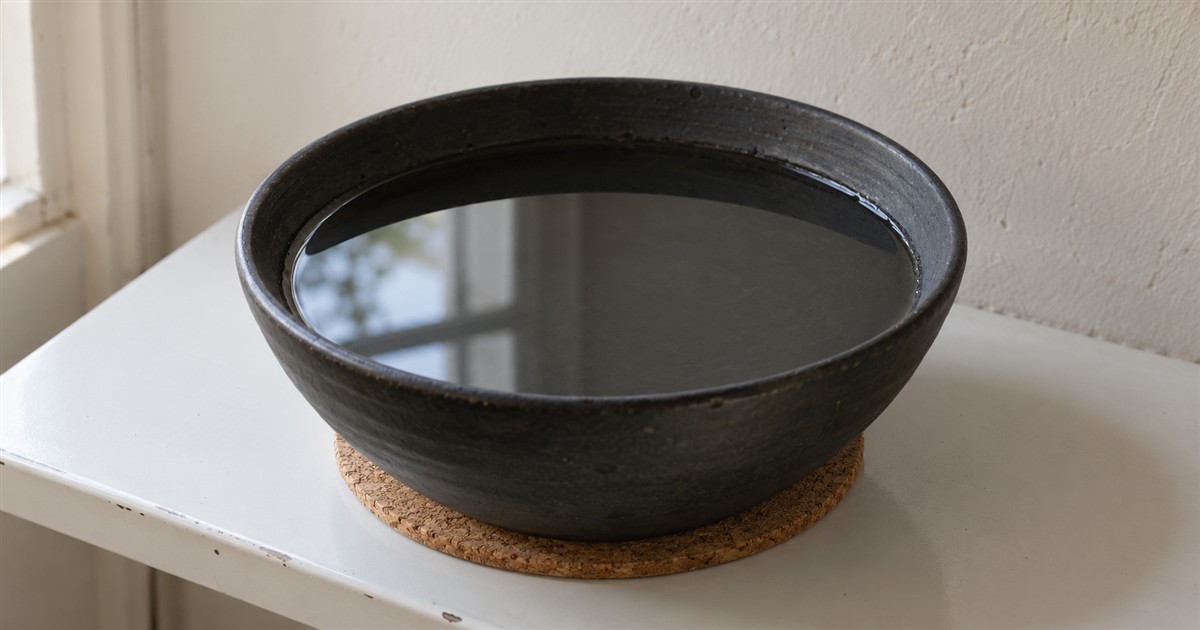
You do not need an antique mirror or costly crystal to begin. A stable bowl of water provides a simple reflective surface. Nor do you need darkness, prolonged staring or a trance. Comfortable light and a brief session are enough for a gentle exploration.
A six-step water-scrying practice
- Prepare a comfortable space. Place a shallow bowl securely on a table, away from electronics and anything you could knock over. Use enough light to see and move comfortably.
- Choose one reflective intention. Try “What quality would I like to bring to this week?” rather than asking for a fixed prediction or a decision you must obey.
- Set a short timer. Begin with three to five minutes. Sit comfortably, breathe normally and let your gaze rest on the water.
- Allow a soft gaze. Blink naturally. Notice reflections, shapes, thoughts or feelings without straining to create a vision. Stop if your eyes become uncomfortable.
- Write what you noticed. Separate a description such as “a curved reflection” from an interpretation such as “it reminded me of a path.” Nothing appearing is a valid outcome.
- Return to an ordinary next step. Look around the room, empty the bowl when finished and choose a small action that makes sense independently of the impression.
You might notice a shifting reflection that reminds you of a bridge. Rather than declaring that it predicts a reunion, ask, “Where would a clearer conversation help?” That turns a symbol into a useful question while leaving other people free to make their own choices.
Using a black mirror or moonlit water
A dark mirror offers a different reflective surface. Place it securely and use indirect light that feels comfortable; total darkness is unnecessary. Covering the mirror afterward can be a personal closing ritual or a way to protect it from dust, not a requirement to prevent unwanted visions.
If you enjoy moonlit water, treat the moonlight as part of the atmosphere rather than a guarantee of messages. There is no need to leave a bowl outside for days. Keep water separate from drinking water, and empty it after the practice. A crystal ball should be stored out of direct sunlight so concentrated light does not create a fire hazard.
Keeping a clear reflection journal
After any of these practices, a short note can be more useful than repeating the session until you get the answer you wanted. Record:
- What actually happened: the words, movement or image you noticed.
- What you associated with it: your interpretation, with room for alternatives.
- How you felt: curious, comforted, uncertain or uncomfortable.
- What you will do next: one grounded action, or simply leave the experience alone.
For a writing-based alternative, explore our automatic-writing guide. You can also compare other gentle practices in our guide to listening to intuition. You do not have to use every tool to have a meaningful spiritual life.
Final thoughts: curiosity with care
Ouija boards, scrying and séances can be explored as distinct spiritual traditions, not tests you must pass. Respect, consent and realistic expectations make more room for a thoughtful experience than fear or pressure ever will.
Choose the practice that feels right for you, keep your own judgment, and allow uncertainty. A moment of remembrance, a gentle reflection or a conversation about something meaningful can have value without becoming a guaranteed message from beyond.
The article highlights various methods for communicating with the dead, each with its own history and traditions. It’s a compelling read for those interested in the topic.
While the article mentions the potential dangers of Ouija boards, it would benefit from more detailed warnings and scientific viewpoints on the psychological effects of using them.
The mention of how Ouija boards are produced by Hasbro Games is interesting. It shows how something with occult connections is commercialized.
I find the advice about respecting the dead to be thoughtful. It’s important to approach such practices with seriousness.
I agree. Respect should be at the forefront when discussing such sensitive topics.
The article provides an interesting overview of methods used for communicating with the dead. However, it would be useful to include more scientific perspectives on such practices.
Although the article is well-written, I remain skeptical about the efficacy of these methods for communicating with the dead. More empirical evidence would be helpful.
The concept of building an altar for communication with loved ones is appealing. Personal touches can make this experience more meaningful.
The historical context about Maggie and Kate is quite fascinating. It’s intriguing to see how mediums were perceived in the 19th century.