

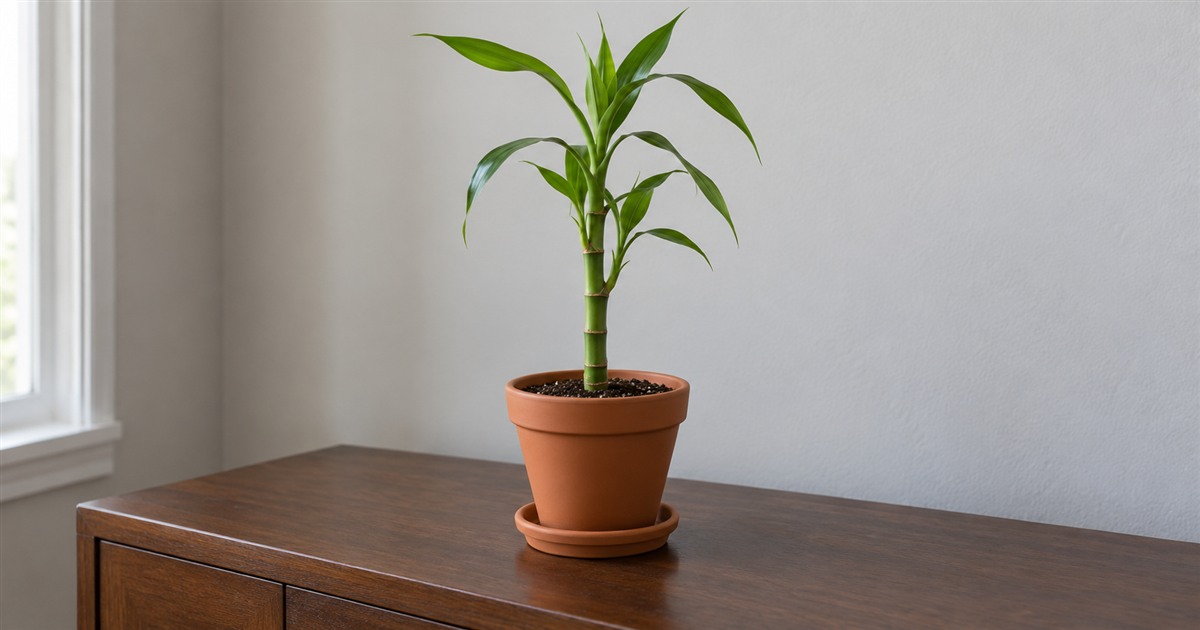
Lucky bamboo · prosperity symbolism · thoughtful plant care
Lucky bamboo can be a lovely reminder of growth, generosity and the life you are building. Its upright green canes bring a living detail to a home or office, while its name invites a hopeful wish for good fortune. You can enjoy that symbolism without expecting a plant to deliver income, protect your health or decide a relationship’s future.
There are two parts to a meaningful arrangement: the intention you give it and the care the living plant needs. A favorite ribbon or a thoughtful gift message can express the first. Suitable light, water and a safe location support the second.
Lucky bamboo is not true bamboo
The plant sold as lucky bamboo is Dracaena sanderiana. The NC State Extension Gardener Plant Toolbox identifies it as a tropical plant from West Africa in the asparagus family, not a true bamboo. Its canes can be trained into decorative forms, and it rarely flowers indoors.
That distinction matters. A picture of a tall bamboo grove is not a care guide for this houseplant, and the familiar name does not tell you whether it is safe for pets. Check the plant’s botanical label when buying it, especially if the seller offers several different plants called “bamboo.”
Prosperity as a symbol, not a guarantee
Lucky bamboo is used in feng shui and given as a celebratory gift. Clemson Extension’s lucky bamboo guide describes symbolic associations for stalk numbers: one for good fortune, two for love and relationships, three for happiness, five for health and six for prosperity.
You may encounter other lists with different associations. Treat a list as an interpretation, not a universal rule or a promise that a particular arrangement produces that result. A health association is a good wish, not protection from illness; a relationship association does not establish compatibility or ensure that a marriage lasts.
If prosperity is your intention, ask what it means to you. Perhaps it is steadier work, enough time to rest, a welcoming home or being able to share with others. The plant can remind you of that quality while your practical decisions remain yours.
For example, you might place it near a work area with the personal intention, “May I make room for patient growth.” The next step could be completing one manageable task or reviewing a commitment before agreeing to it. You do not need to purchase a larger arrangement to make the intention valid.
Our guide to approaching feng shui thoughtfully explores harmony without pressure to buy remedies or change yourself to deserve good fortune.
Choose the location for the plant and the household
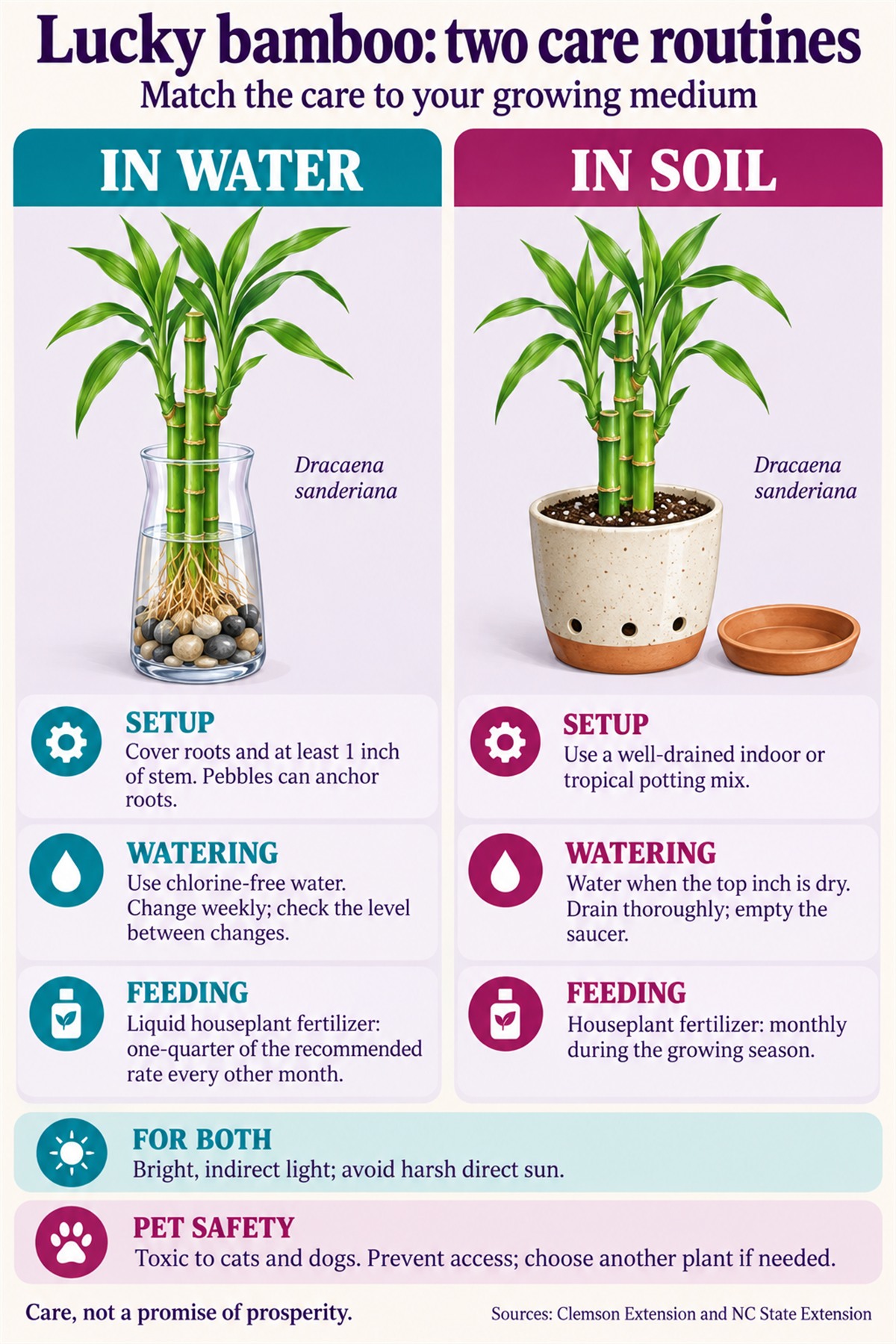
Bright, indirect light is suitable indoors; harsh direct sun can damage the leaves. An attractive symbolic corner is not a useful choice if it cannot meet the plant’s needs. A safe, stable position also matters more than following a placement rule you do not understand.
Choose somewhere you can reach for care without blocking a walkway or placing water where a spill could damage electrical equipment. Do not put a vase on the edge of a busy desk or in a place where children can pull it down. If you share the space, agree on the location rather than turning your spiritual preference into a rule for everyone.
A red or gold ribbon can be an optional decorative expression of your intention. It does not make the plant more powerful. Place decorations so they do not obstruct care, and avoid tight ties that restrict growing stems. A simple container you already like can be enough; a special animal motif or charm is not required.
How to care for lucky bamboo
Water-grown and soil-grown plants need different routines. First identify which arrangement you have, then use the appropriate care guidance rather than applying both at once.
1. If it grows in water
Keep the roots covered and change the water weekly. NC State recommends chlorine-free water and notes that pebbles help anchor the roots and stabilize the container. Check the level between changes; do not let the roots dry out.
Clemson recommends enough water to cover the roots and at least an inch of the stem. Its water-growing guidance suggests a liquid houseplant fertilizer at one-quarter of the recommended rate every other month. Do not improvise extra fertilizer as a way to encourage extra luck.
2. If it grows in soil
Clemson recommends a well-drained indoor or tropical potting mix. Water when the top inch is dry, allow thorough drainage and empty standing water from the saucer. Its soil-growing guidance recommends houseplant fertilizer monthly during the growing season.
Keep the care instructions with the plant so that another household member knows which routine applies. If you are uncertain about the product or dilution, ask a garden center or local extension service before adding it.
3. If leaves or stems change
NC State notes that overwatering can cause yellow leaves and rotting stems, while low humidity can brown leaf tips. It also advises watching for pests such as mealybugs, mites and scale. A change in appearance is a reason to review growing conditions, not a prediction of financial loss.
Note what changed recently and seek plant-care advice if needed. Do not add several products at once or treat every yellow leaf as a spiritual warning. Replacing an unhealthy plant, or deciding that this plant does not suit your space, is not a moral or spiritual failure.
Important safety: children, cats and dogs
Lucky bamboo is not an edible plant. Keep it away from children who might chew it and from pets that can reach its leaves or canes. A high shelf is not a solution if a cat can still climb to it; choose another plant or a nonliving decoration if you cannot prevent access.
The ASPCA’s houseplant safety guidance identifies Dracaena plants as toxic to cats and dogs. If a pet chews or swallows the plant, contact a veterinarian or animal poison-control service for advice. Do not wait for a spiritual interpretation of the incident or try an unverified home remedy.
Before giving the plant to someone, ask whether their household can safely keep it. A good-luck gift should not introduce a risk they did not know about.
A thoughtful gift and a gentle routine
You can give lucky bamboo with a warm wish without predicting the recipient’s future. A note such as “Wishing you steady growth and happiness in your new home” is enough. Include the plant’s name, its care instructions and the pet warning so that the gift is useful as well as meaningful.
For your own arrangement, connect the care routine to one small reflection: What am I nurturing this week? What needs patience? What practical step can I take? Our guide to clarity and manageable goals can help turn that reflection into a next step.
If you enjoy prosperity symbolism more broadly, Money Chakras offers another spiritual perspective. Keep symbolic practices separate from financial guarantees and decisions that need reliable information.
Let the plant be a companion to your intentions, not a test of whether you deserve abundance. Caring for something living can carry its own quiet meaning. Your future is not determined by a ribbon, a stalk count or a leaf changing color.
The suggestion to use red or gold ribbons to enhance the plant’s positive effects is an interesting concept. It shows how symbolic elements can be combined to amplify the intended benefits.
The practice of gifting Lucky Bamboo at weddings to share good luck and ensure a long-lasting marriage is a beautiful tradition. It reinforces the communal aspect of prosperity and happiness.
The distinction between Lucky Bamboo and real bamboo is especially interesting. It highlights how traditional names can sometimes lead to misconceptions about a plant’s true botanical identity.
It is fascinating to learn that Lucky Bamboo has been integrated into Feng Shui practices to symbolize prosperity and attract positive energy. The historical and cultural significance adds depth to its appeal.
The cultural context provided about Lucky Bamboo’s significance in the East enriches the understanding of how plants can be more than just decorative elements, serving deeper symbolic purposes.
I appreciate the practical advice on caring for Lucky Bamboo. It seems like an easy plant to maintain, which makes it accessible for both homes and offices.
I’ve had a Lucky Bamboo in my office for years. It truly is a resilient plant and a great way to bring a touch of nature indoors.
Indeed, the low maintenance requirements make Lucky Bamboo perfect for people with busy lifestyles who still want to benefit from its positive energy.
This article provides a thorough explanation of Lucky Bamboo’s role in Feng Shui. I’m intrigued by the specific recommendations for stem combinations to attract different types of good fortune.
The scientific care instructions regarding water, light, and fertilizer are straightforward and clear. This practical information is very helpful for anyone looking to cultivate Lucky Bamboo successfully.