

LAW OF ATTRACTION / DISCOVERING WHAT MATTERS
Sometimes the hardest part of an intention is not believing in it. It is working out what you actually want. “A better life” may feel heartfelt, but it can hold several different wishes: more rest, meaningful work, a loving relationship or the freedom to make your own choices.
For people who enjoy the Law of Attraction, clarity can be a way of listening inward before sending an intention outward. You might experience that as a conversation with the universe, a prayer or a moment of alignment. Let that spiritual meaning encourage curiosity rather than pressure you to produce a perfect wish.
The four exercises below keep the original spirit of this article: gratitude papers, supportive friends, an inspiring role model and scrapbook journaling. Each offers a different way to discover what belongs in your intention. You can use paper, a voice note or a private digital document; artistic skill is not required.
Clarity is understanding a wish, not controlling an outcome
The Law of Attraction is a spiritual belief that thoughts, feelings or energy attract corresponding experiences. It is not a guarantee that a sufficiently clear thought will secure a job, cure an illness or cause another person to love you. External circumstances and other people’s choices still matter.
Instead of asking whether your wish is powerful enough, ask whether you understand it. What quality are you hoping to experience? What would it look like in ordinary life? What part is yours to choose, and what part depends on circumstances or someone else’s consent?
For example, “I want everyone to admire me” places your satisfaction in other people’s hands. “I want opportunities to share work I care about” gives you something more personal to explore. It might lead to a small exhibition, a class or simply making time for a project.
You are allowed to revise an intention. A changing wish is not evidence that you confused the universe. It may mean you have learned something about yourself.
1. Keep gratitude papers: find the qualities you already value
Keep a supply of paper, pens and pencils, and crayons or markers in a prominent location in your home. This will make it easy to spend about 10 minutes writing about things you have that you feel grateful about. Fill a sheet with both words and pictures if you like. This is not an art or literature competition, so draw and write only for yourself.
Make the page specific. Instead of “friends,” you might write, “Someone listened without rushing me.” Instead of “home,” you could draw the corner where you feel comfortable reading. Small, honest observations are enough; you do not need to be grateful for a painful experience.
Under each observation, name its underlying quality: being heard, steadiness, creativity, belonging or quiet. Look for a quality that appears more than once. It can reveal what you would like to welcome more of.
Stack your gratitude papers together. Occasionally, choose a few pages and seal them in an envelope addressed to yourself. You can mail it as the original exercise suggests, or put it aside to open later. Either way, it becomes a gentle reminder of what matters to you, not a transaction that obliges the universe to send a reward.
The National Institute of Mental Health’s self-care guidance includes specific gratitude, setting priorities and reaching out for emotional and practical support. Those everyday practices can sit alongside your spiritual reflection without proving a manifestation claim.
2. Choose supportive friends: ask for curiosity, not constant agreement
A conversation with someone who knows you can help distinguish your own wish from an expectation you have absorbed. Choose a person who can listen respectfully, ask useful questions and leave the final decision with you.
Support does not mean pretending everything is wonderful. A friend can be worried, grieving or having a difficult week and still care deeply about you. Their sadness does not block your future. Likewise, a thoughtful warning about a cost or commitment is not automatically “negative energy.”
Try asking for a particular kind of conversation: “I am still working out what I want. Could you listen first, then ask me a few questions rather than choosing for me?” Useful questions include:
- What do you hope this change would give you?
- Which part excites you even if nobody else notices?
- Is there something you would miss or need to protect?
- Does the wish sound like you, or like someone you feel you must impress?
If someone repeatedly mocks your hopes, you can limit what you share or end that conversation. You do not have to label the whole person bad or abandon every old friendship. Our guide to recognizing a meaningful friendship explores connection and mutual care.
Afterward, write down what became clearer—not whether the friend approved. Your intention remains yours.
3. Emulate a hero: borrow a value, not an entire life
Heroes give us values to emulate. Someone’s patience, courage, generosity or dedication can make an abstract wish feel more tangible. Your role model might be a public figure, an artist or a person in your own community.
Choose one quality rather than trying to copy their appearance, career or recognition. Public success rarely shows every difficulty, advantage or contribution from others. Admiration can inspire you without becoming proof that an identical path will produce an identical result.
Use three short lines: “I admire their…”; “That matters to me because…”; and “In my life, that could look like…”. For instance, admiring a writer’s persistence might reveal a wish for a regular creative practice, not necessarily fame.
Keep the scale your own. If you admire generosity, your expression could be checking on a neighbor or sharing a skill. You need not become wealthy before living a generous value. If a role model makes you feel that your ordinary life is never enough, choose someone whose example leaves more room for your humanity.
4. Start scrapbook journaling: notice how your wish changes
Scrapbook journaling combines writing with images of what interests you. Repeating the ritual can give you a record to revisit: which ideas keep returning, which lose their appeal and which turn out to represent a deeper need?
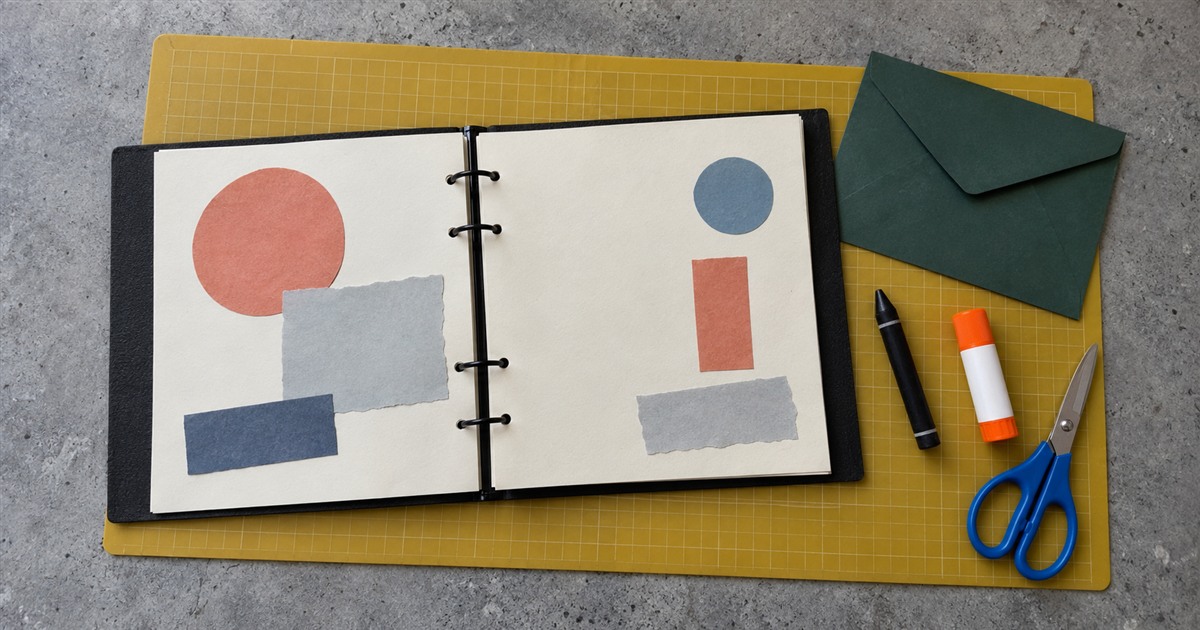
Make a page for a current wish. Add a sketch, a photograph you have permission to use or a few shapes and colors. Beneath it, complete “I think I want this because…”. Then add “I would still value this if…” to explore whether the attraction depends on status, praise or comparison.
Keep earlier pages instead of treating them as mistakes. Date a new entry when your understanding changes. The point is not to make an ever more exact shopping list for the universe, but to recognize your own evolving priorities.
An illustrative example: A person starts a page about their dream home, with pictures of large rooms. Later entries focus on a sunny reading corner, nearby friends and fewer exhausting chores. Their clearer wish becomes a manageable home with room for rest and connection. That insight could change what they look for without requiring a larger or more expensive house.
The same approach works with love. Instead of collecting an ideal face, explore how you want a mutual relationship to feel in everyday interactions: heard, respected, free to be yourself. Someone else’s feelings are not an outcome to command, and you do not have to become a different-looking person to deserve care.
If you enjoy a quiet pause before journaling, try our meditation and visualization exercise. Ordinary words are just as welcome as vivid mental pictures.
Bring the four exercises together
Choose one recurring quality from your pages, conversations and role models. Write an intention in a sentence you can understand without explanation. Then distinguish what you can explore from what you cannot promise.
For example: “I want more space for creative work because expressing myself matters. I can explore a small weekly practice. I cannot promise that other people will buy or praise what I make.” That is a clear intention with room for both hope and reality.
If two wishes conflict—more adventure and more stability, for example—do not force yourself to erase one. Ask what a modest expression of each would look like. A planned local outing may fit your current life better than a dramatic change.
When you are ready to move from discovering a wish to planning a next step, our guide to goals and the Law of Attraction offers an intention-to-action framework. You do not need to keep polishing your wish before you are allowed to begin.
Return to these exercises when they feel helpful, not as a test of spiritual discipline. An uncertain day, a difficult feeling or an unwanted outcome does not make you less deserving. Clarity can be gentle: knowing a little more about what matters, and leaving enough room to keep learning.
I appreciate the structured approach to clarity and gratitude. Keeping Gratitude Papers and choosing positive friends seem to be practical steps that anyone can implement.
Overall, the article offers practical and creative strategies for applying The Law of Attraction. However, it remains essential to pair these methods with realistic expectations.
Emulating a hero as a strategy to overcome ambiguity is a thoughtful suggestion. Role models can indeed provide clear pathways and inspiration.
The article provides a fascinating insight into the mechanics of The Law of Attraction. However, it seems to require a lot of personal effort and consistent practice to see results.
The analogy with scrapbooking to clarify goals is quite unique. It makes the process of manifesting desires feel more tangible and creative.
The notion that surrounding oneself with positive people can significantly impact one’s life is compelling. But I wonder how practical this approach is in more challenging social environments.
It may indeed be difficult, but it could be about making gradual changes rather than drastic ones. Small steps might lead to significant improvements over time.
True, but even small positive influences can eventually outweigh negative ones. It’s a matter of persistence and consistency.
The idea of using scrapbook journaling to manifest desires is intriguing. The iterative process of refining one’s goals seems helpful for self-discovery and clarity.
While the concept is intriguing, I find the anecdotal evidence provided somewhat anecdotal. It would be interesting to see more empirical data supporting these claims.
I agree. Empirical data would definitely add more credibility to the principles discussed in the article.