

ANIMAL SYMBOLISM / CHANGE, ADAPTATION & STEADINESS
Inspiration sometimes comes from unlikely sources, including the scaly creatures that may make you shudder. A reptile encountered outdoors, remembered from a picture or appearing in a dream can become a meaningful image for reflection. With so many majestic animals in the world, you might imagine a soaring hawk, a playful dolphin or a tiger before considering a snake or turtle.
But an animal does not have to be your favorite to spark a useful question. If you understand animal imagery spiritually, a reptile may feel connected with change, resourcefulness or steadiness. That meaning is an interpretation, not proof that an animal has delivered a message or assigned you a permanent guide. You can be curious without needing certainty.
The five themes below retain this article’s original creative associations. They are possibilities to explore, not universal meanings shared by every culture or instructions to make a major life decision.
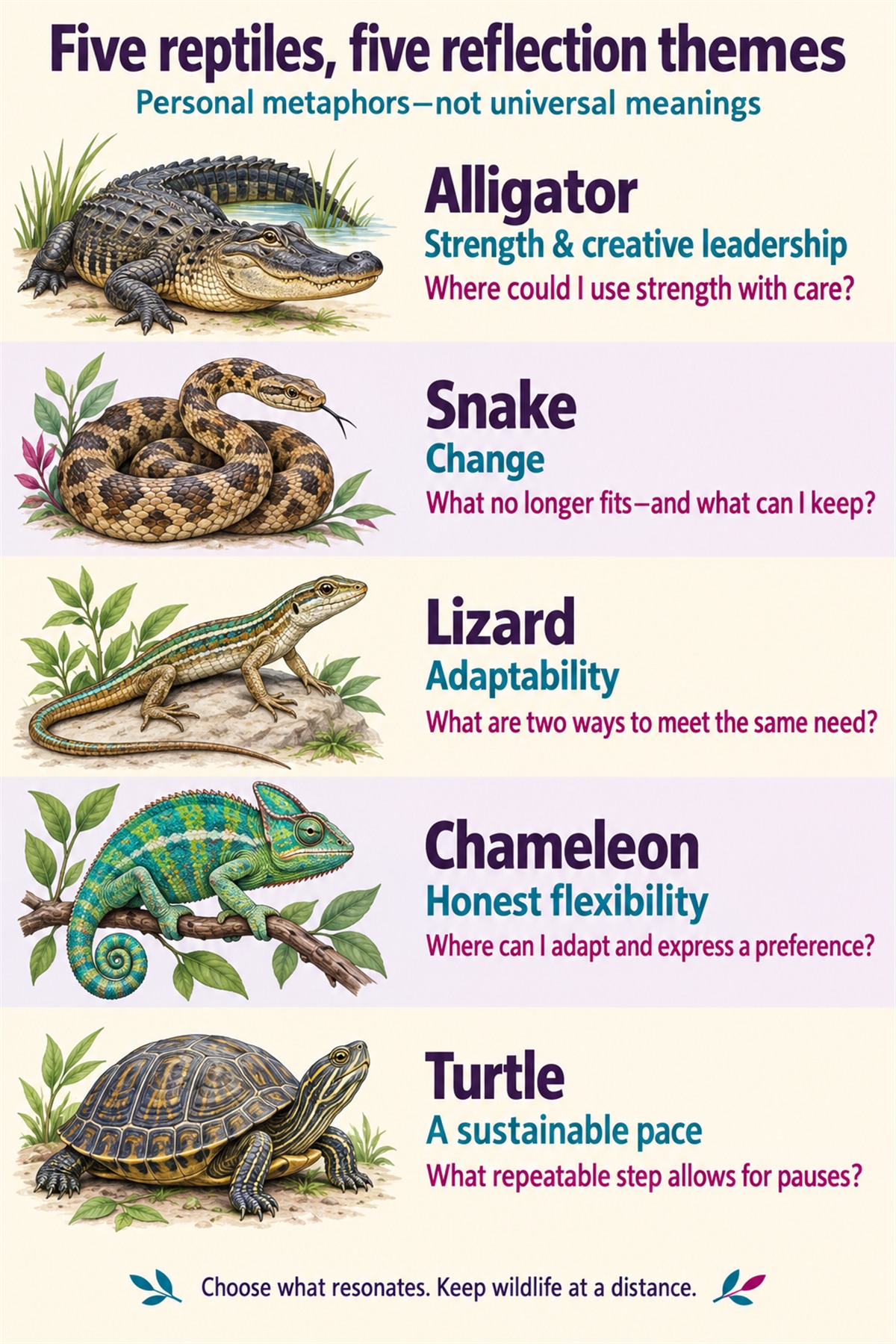
Five reptiles, five possible reflection themes
1. Alligator: strength and creative leadership
The original alligator theme invites you to consider strength, creativity and leadership. As a personal symbol, its substantial presence might bring to mind a capacity you have overlooked: organizing a project, protecting time for creative work or taking responsibility for one manageable task.
Try asking, “Where could I use my strength with care rather than force?” Leadership might mean listening, sharing credit or asking for help, not becoming the loudest person in a room. An alligator image does not predict that a venture will succeed or prove that you should take a financial risk.
A small next step: identify one creative idea and the resources it actually needs. For example, sketch a plan for a community art afternoon before committing to a venue or asking others to join. Keep the image as encouragement, and assess the practical details separately.
2. Snake: change without rejecting your whole past
The snake remains a useful image for transition. San Diego Zoo’s snake guide explains that snakes shed their skin. That natural process can inspire a metaphor, but it does not mean human change should be effortless or immediate.
Ask what no longer fits: an unrealistic expectation, an overfull schedule or an assumption you have not questioned. You do not have to shed every friendship, memory or familiar part of yourself to grow. Some things need adjustment; others remain valuable.
A small next step: finish the sentence “I can change this one habit while keeping…” A person trying a new creative practice might keep their usual evening routine but replace ten minutes of scrolling with drawing. A snake dream is not evidence of betrayal, illness or danger from a particular person.
3. Lizard: adaptability and protective choices
The original lizard theme concerns adapting to circumstances and knowing when to step back. Real lizards are diverse: San Diego Zoo describes tail shedding as a defense used by some lizards. It is not an ability shared by every species, and it should never be tested by handling or frightening an animal.
For reflection, adaptability need not mean accommodating everyone else’s wishes. It could mean changing a plan, finding an accessible alternative or deciding that rest is more useful than another push. A quieter response can be a choice, not a sign of weakness.
A small next step: name two ways to meet the same need. If an outdoor gathering is no longer workable, could you arrange a shorter indoor visit or a phone conversation? The symbol can open options; it cannot tell you whether another person is safe or what they secretly intend.
4. Chameleon: flexibility without losing yourself
A chameleon offers a vivid image for change, but the familiar explanation needs care. According to San Diego Zoo’s chameleon guide, these animals do not simply choose to match any background. Color changes can relate to communication and environmental conditions, including light and temperature. A chameleon is also a kind of lizard, although this article considers it separately for its distinct imagery.
As a personal metaphor, ask where you adapt comfortably and where you feel you must hide every preference. Using a different communication style at work may be helpful. Pretending to agree with everything a friend says may leave you feeling unseen. Neither conclusion follows automatically from seeing a chameleon.
A small next step: practice expressing one ordinary preference: a meeting time, an activity or a subject you enjoy. You can be flexible and honest together. Do not treat an animal image as an order to end a relationship or as proof of disloyalty.
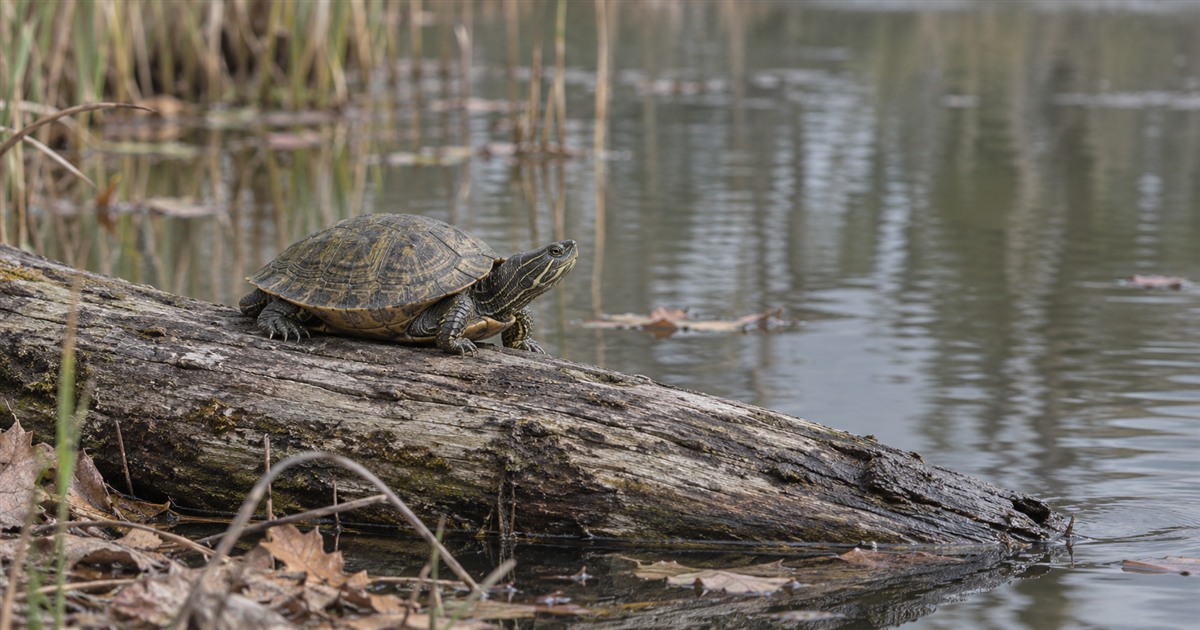
5. Turtle: a sustainable pace
The turtle theme retains the familiar invitation to steady progress. It is a metaphor rather than a rule about every turtle’s speed or a promise that the slowest approach always wins. What matters is a pace that fits the task, your circumstances and your available energy.
Ask, “What would progress look like if I allowed for pauses?” A large goal may become easier to approach when you define the next part rather than demanding a complete transformation today. Sometimes a deadline calls for timely help instead of simply waiting.
A small next step: choose one repeatable action and a realistic review point. You might work on a draft for fifteen minutes twice this week, then decide whether the plan needs changing. Rest and revision can belong to the process; a symbol does not guarantee the outcome.
A simple way to explore your own meaning
Write three short notes: the animal or image you noticed, what you personally associate with it and one practical question it raises. Keep observation separate from interpretation. “I saw a turtle beside a pond” is different from “I took it as a reminder to slow down.” Both can have a place without making the interpretation a fact about the animal.
For a dream, you can work with what you remember rather than searching for a compulsory definition. If nothing resonates, there is no missing message you must uncover. Our guide to exploring an animal-guide connection offers a broader discovery exercise, while reflecting on possible signs can help you hold meaning lightly.
Let respect for the animal come first
Animal-related beliefs belong to particular people and traditions, not one interchangeable system. You can describe a personal connection as animal symbolism or an animal-inspired reflection without claiming a culture’s sacred role, ceremony or authority. Learn from community-led sources if you wish to understand a specific tradition.
A meaningful encounter does not require approaching, feeding, touching or collecting a wild reptile. Follow local guidance and keep your distance, especially around snakes and alligators. The National Park Service’s wildlife-watching guidance emphasizes giving animals room and following each park’s rules. Use binoculars or admire a picture when that is the safer option.
A spiritual affinity is not a reason to acquire a reptile impulsively. Our article on animal connection and responsible care keeps companionship separate from interpretation. You can appreciate a creature, learn about it and let its image inspire a thoughtful choice without making it responsible for your future.
The connection between reptiles and primal energy is intriguing. It makes sense why such creatures would be significant as spirit animals.
I appreciate this article’s explanation of different spirit animals. It provides a new perspective on reptiles that goes beyond their often negative stereotypes.
This article encourages a broader understanding of spirit animals and their meanings, which can be enlightening.
Agreed, it’s important to consider the diverse ways animals can symbolize different aspects of life.
The concept of the turtle reminding us of ‘slow and steady wins the race’ is timeless advice.
True, it reinforces the value of perseverance when pursuing long-term goals.
It’s a good reminder to stay focused on progress and not be disheartened by setbacks.
The alligator’s association with creative energy and leadership is a compelling interpretation. It encourages us to explore our own depths for hidden strengths.
The chameleon’s ability to adapt and change colors is an excellent reminder of the necessity of adaptability in our own lives.
The symbolism behind reptiles as spirit animals is quite fascinating. It challenges us to look beyond common perceptions and find deeper meanings.
The notion of a snake shedding its skin as a symbol of transition is a powerful metaphor for personal growth.
Indeed, it emphasizes the importance of letting go of the past to move forward in life.