

ROBIN SYMBOLISM · RENEWAL · THOUGHTFUL OBSERVATION
A robin’s warm-colored breast, lively movement or song can turn an ordinary garden moment into something you remember. If you enjoy animal symbolism, you may find yourself wondering what the encounter brings to mind: a fresh beginning, a feeling of home or encouragement to speak more openly.
Some spiritual seekers understand robins as possible reminders of divine care or angelic support. You can welcome that personal interpretation without treating a bird’s arrival as proof that a prayer has been answered or that a particular future event is coming.
First, which robin are you seeing?
The name “robin” can refer to different birds. Knowing a little about the one near you helps keep nature and symbolism distinct.
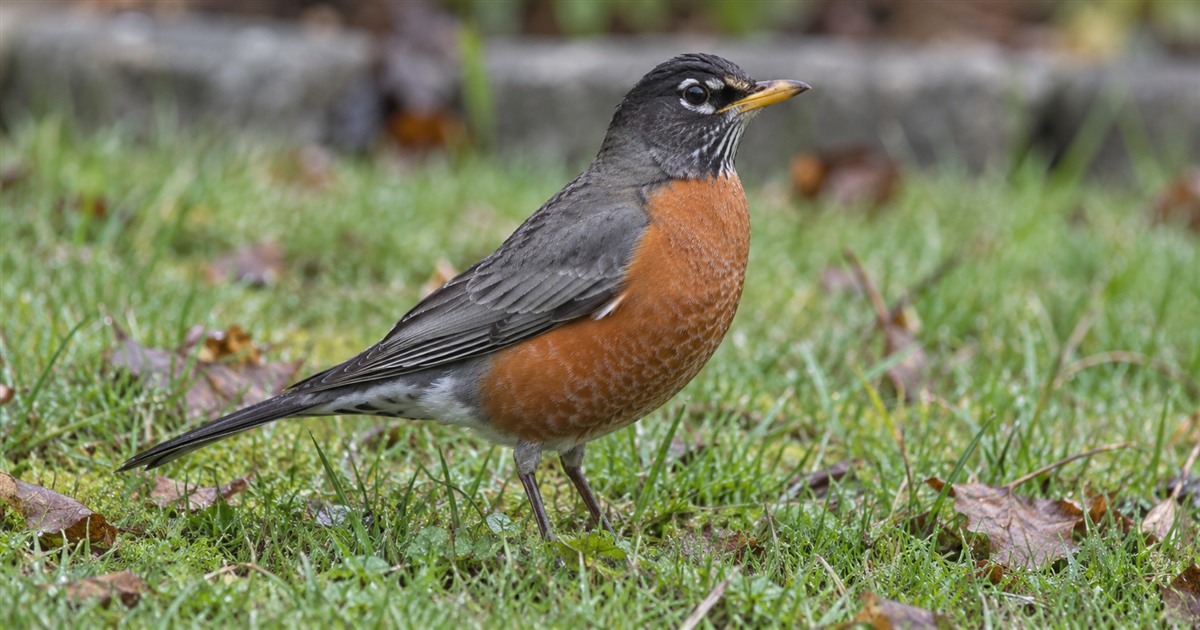
The Cornell Lab of Ornithology’s American Robin guide describes Turdus migratorius, a thrush familiar across North America with a warm orange breast. You may see it foraging on lawns or in parks. Although associated with spring, many American Robins remain in their breeding range through winter; not noticing one on your lawn does not necessarily mean it has left the area.
The RSPB’s European Robin guide describes Erithacus rubecula, a different species familiar in the UK, with an orange-red face and breast and a brown back. It is present year-round in the UK. The RSPB notes that it can follow gardeners to take advantage of unearthed food and can strongly defend its territory.
The cover illustrates an American Robin. Neither species’ appearance or behavior establishes that it knows you need guidance. A bird coming close can have an ordinary reason, even when the timing feels personally meaningful.
Renewal: what would a fresh beginning look like?
A robin can become a personal symbol of new beginnings. You might associate its lively presence with returning to an interest, noticing a new possibility or finding a little energy after a difficult stretch. That meaning belongs to your reflection; it is not a forecast that change must arrive.
Ask, “What small beginning is available to me?” A new beginning could be repairing something, asking a question or changing one part of a routine. You do not need to abandon everything familiar or make a dramatic commitment.
For example, imagine you see a robin while thinking about learning a skill. You could let the encounter remind you to look up an introductory class and check whether it fits your budget and schedule. The bird has not guaranteed success; it has become a prompt to investigate. If you want help restarting an existing routine, see our gentle getting-back-on-track guide.
Home and support: what helps you feel connected?
The idea of a robin as a symbol of home or family may resonate with you. But you do not need a claim that every robin returns to its birthplace each year to find that theme useful. Nor does a bird’s nesting behavior prove that your own family situation is safe or supportive.
Consider what “home” means in your life. It might include relatives, chosen family, a trusted friend, a familiar place or a routine that helps you feel settled. Ask, “Who or what offers real support, and what kind of help could I request?”
A practical response might be arranging a conversation, making a comfortable corner in your room or checking in with someone you appreciate. If a relationship is difficult, the symbolism is not a reason to ignore boundaries or return to an unsafe situation. Connection should leave room for your needs.
Voice and attention: use color as a metaphor, not a code
You may associate the robin’s warm breast with courage or vitality, or an American Robin’s yellow bill with expressing yourself. These are optional metaphors, not universal spiritual definitions. The same colors may remind another person of something entirely different.
Try “What would I like to say clearly and kindly?” Perhaps you want to thank someone, ask for information or explain a preference. Speaking honestly does not require sharing every private thought or confronting someone when it is unsafe to do so.
Pale markings around an American Robin’s eye do not grant a view of your future. If they inspire a theme of clearer seeing, bring it back to the present: “What information am I missing?” or “What assumption should I check?” A concrete answer is more useful than trying to decode the bird’s appearance into a prediction.
If you experience the robin as spiritual encouragement
A moment outdoors can feel reassuring. If a robin reminds you of guardian angels, divine care or someone you love, you can hold that feeling gently as part of your spiritual life. The encounter itself cannot identify a messenger, verify another person’s intentions or promise that a wish will come true.
You do not need increasingly frequent sightings to keep the reassurance. A quiet day without robins is not a warning or a measure of your spiritual connection. If you enjoy reflecting on a single creature’s appearance, our butterfly-sighting guide explores remembrance and change through a different natural image.
For broader animal inspiration, the personal animal-symbol exercise offers a gentle starting point. It is not a test assigning you a lifelong identity or a substitute for learning about the animal itself.
A simple way to reflect and then return to your day
- Observe. Note where the robin was and what it actually did. “It paused on a branch” is different from “It waited to deliver a message.”
- Make an association. Name the feeling or theme the sighting brings up: renewal, home, voice or simple appreciation.
- Check the context. Food, habitat, season and local bird behavior may help explain why it was there. You can keep personal meaning alongside that explanation.
- Choose one response. Take a manageable step, remember someone with affection or simply enjoy the bird. No action is required to satisfy an omen.
Watch without chasing the robin, disturbing a nest or trying to force a close encounter. Use binoculars or a camera from a respectful distance if you want a better view. Let the bird continue its own life.
The significance of seeing a robin can be modest and still meaningful. You may notice a little hope, recognize a need for support or find words for a question. Let the encounter enrich your attention without closing off your choices.
The article presents an interesting view on the symbolism of robins, linking them to change and new beginnings.
The association of robins with guardian angels and transitions adds a spiritual dimension to their presence.
It’s fascinating to think of robins as messengers and symbols of wisdom and community.
I appreciate the detailed explanation regarding the robin’s connection to familial habits and safety.
The notion that robins signify not holding on to the past is particularly thought-provoking.
The interpretation of the robin’s features, such as the yellow beak urging truth, is quite symbolic and profound.
The connection between the robin’s physical attributes and elements like fire and the sun is intriguing.
Indeed, such interpretations can add layers of meaning to common observations in nature.
Overall, the article provides a rich tapestry of meanings associated with the robin, going beyond its simple beauty.